
Last updated November 21, 2026
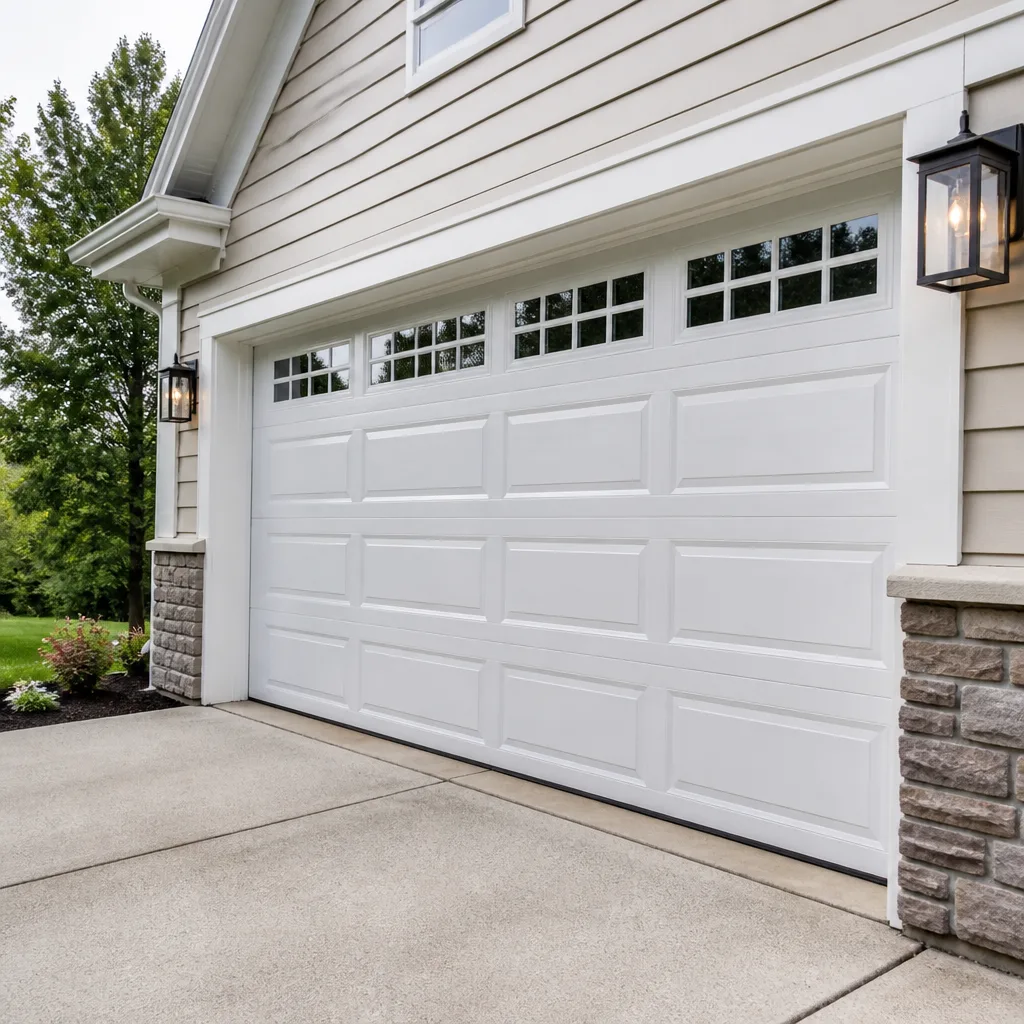 Raised-panel steel
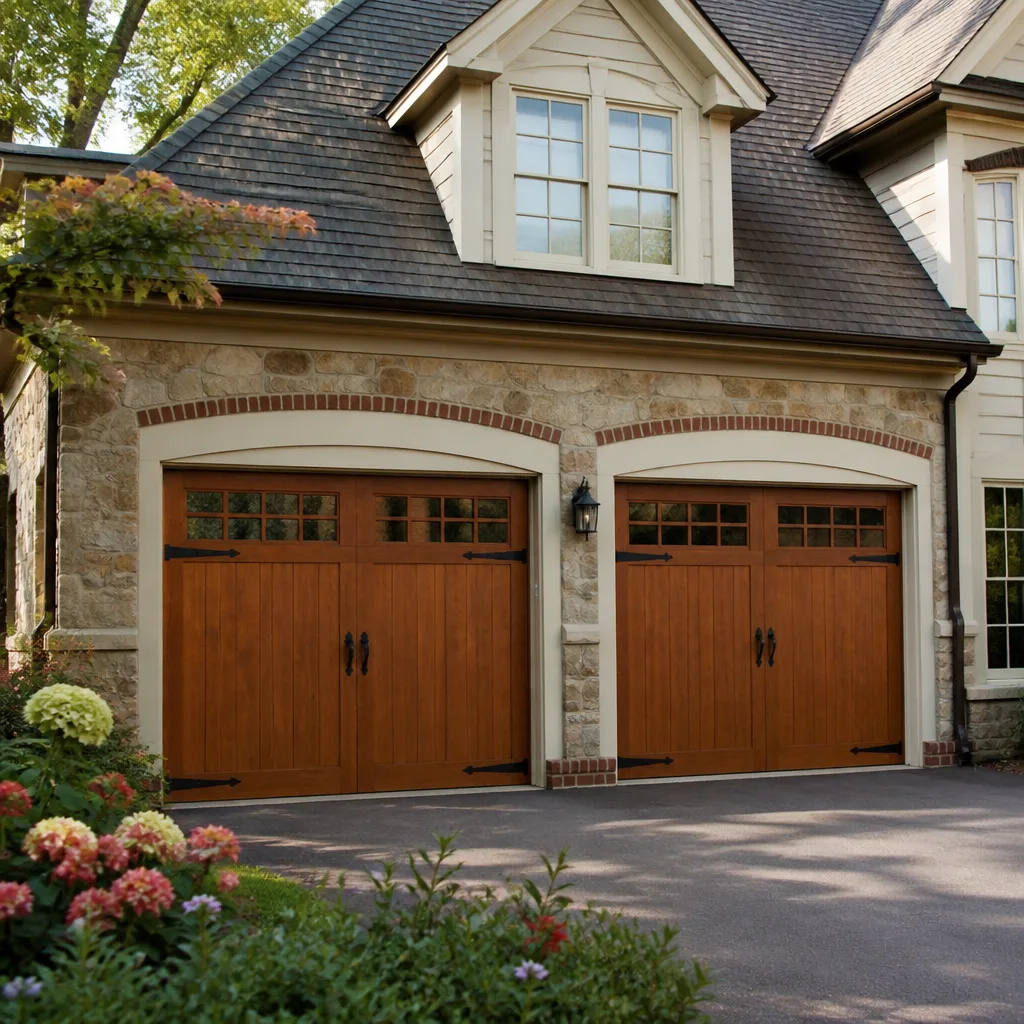 Carriage house
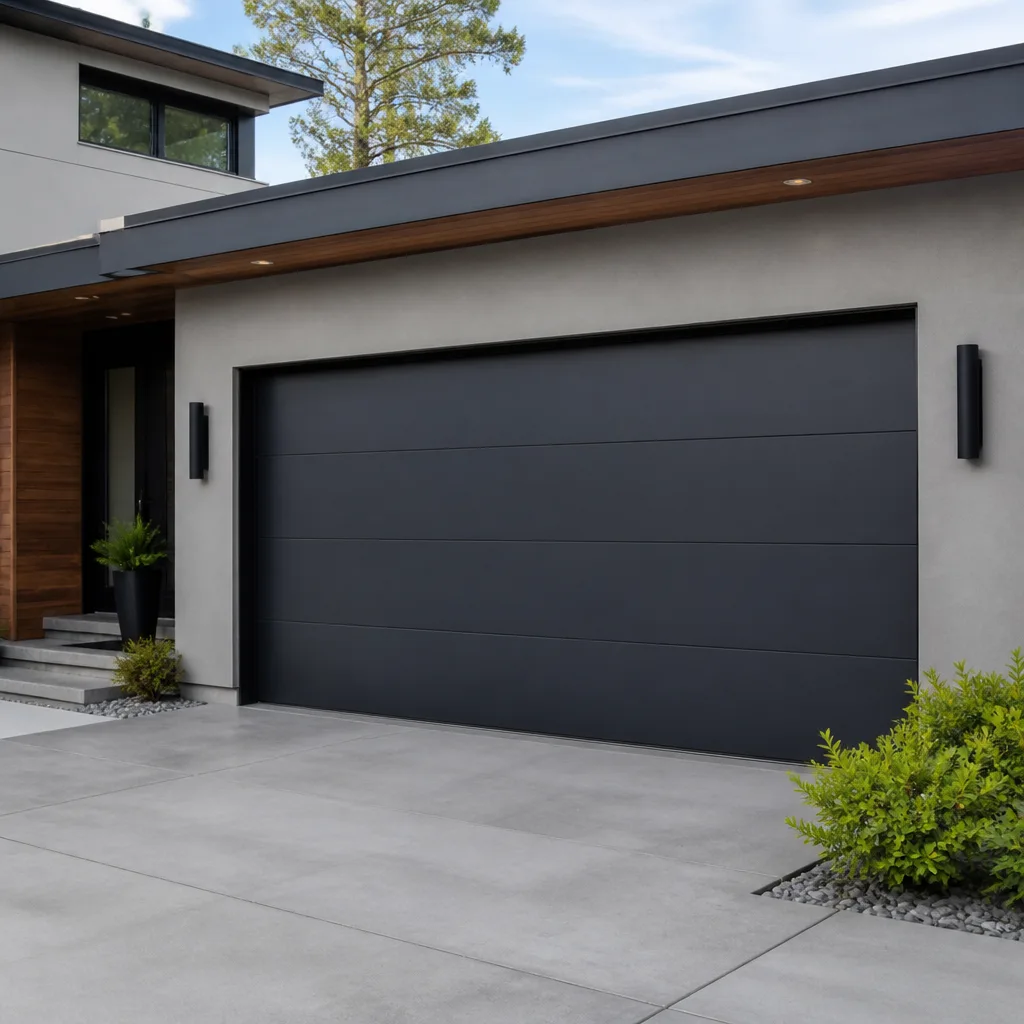 Modern flush
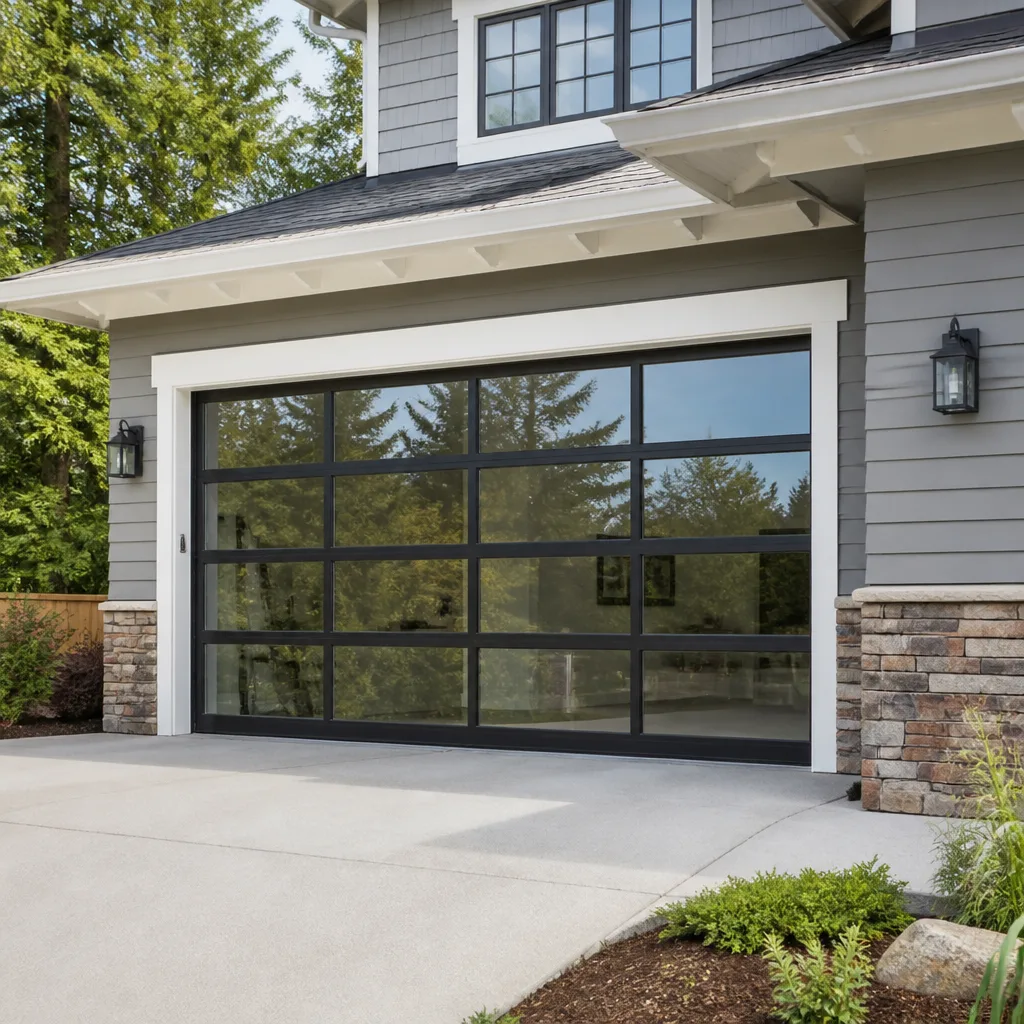 Full-view glass
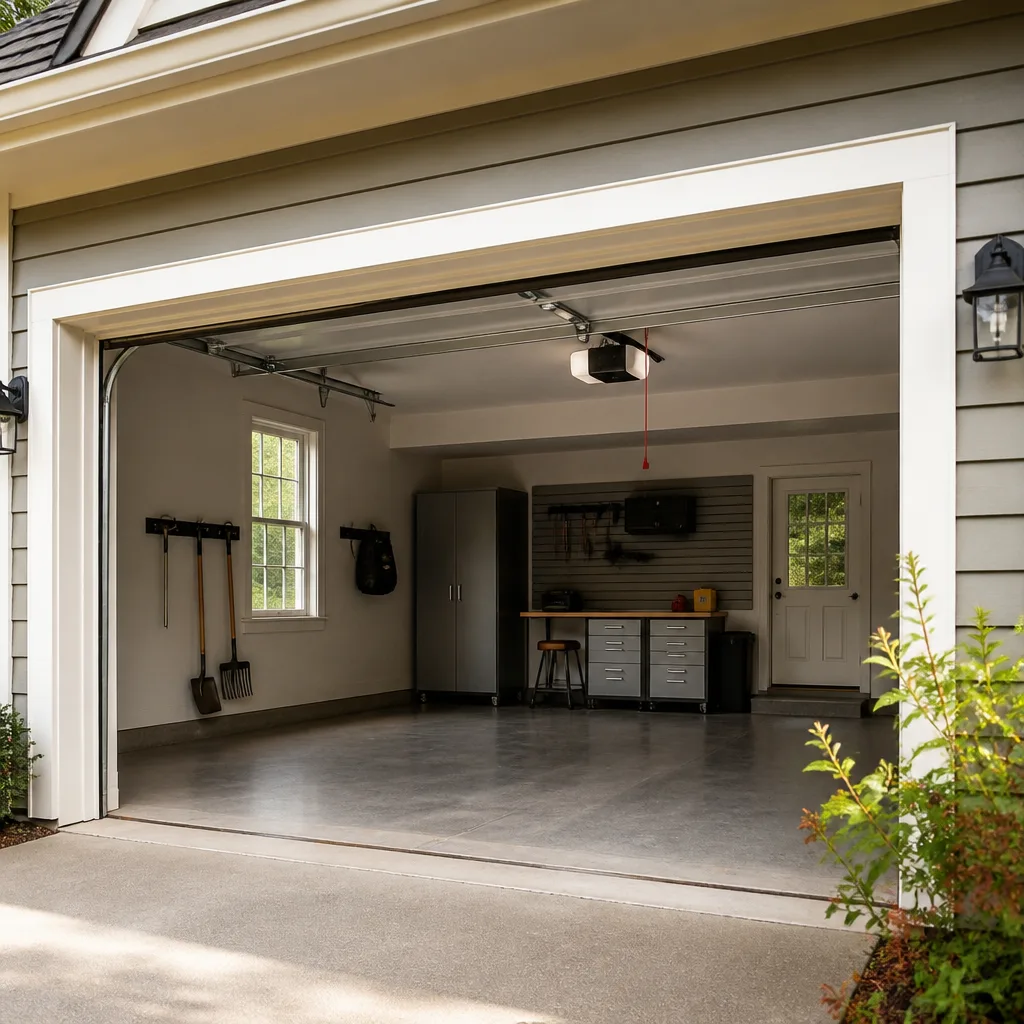 LiftMaster openers
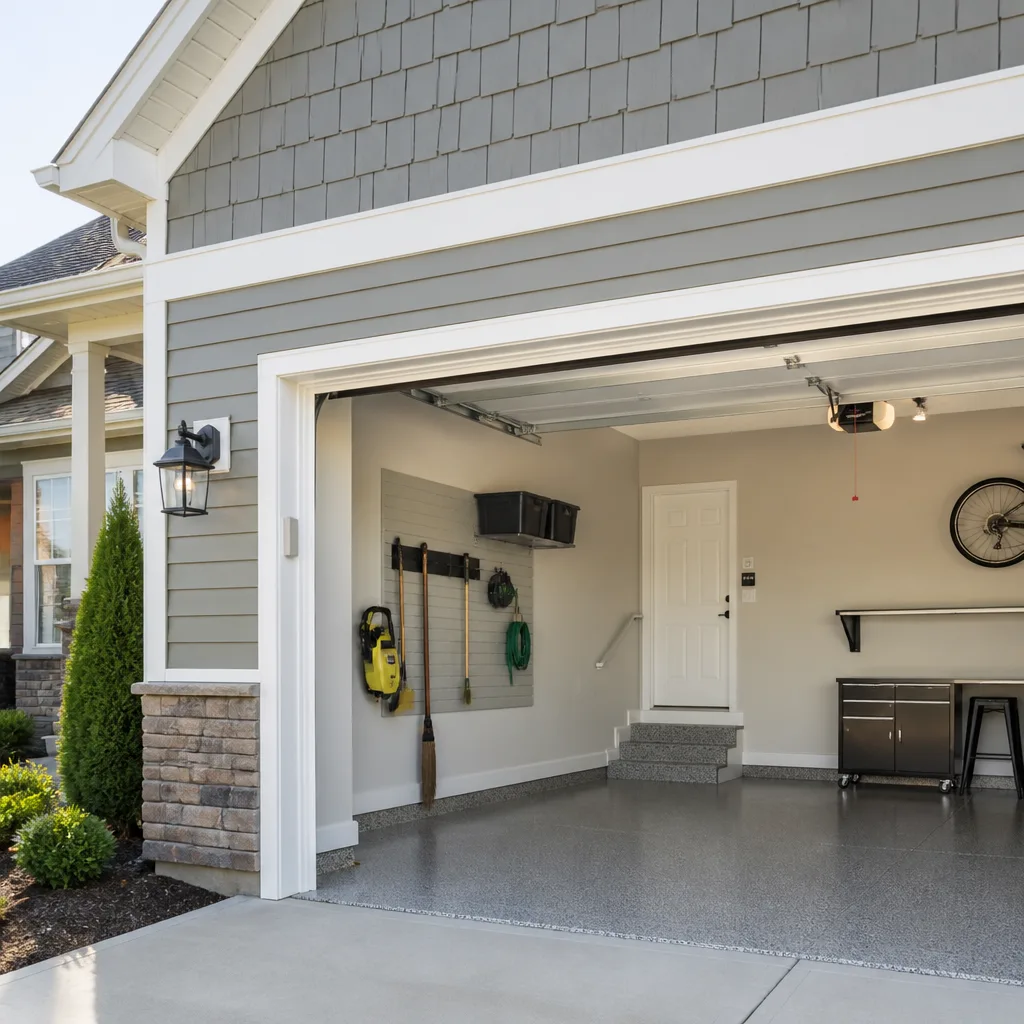 Chamberlain openers
Full 25-point door and opener safety check with every visit - springs, cables, rollers, tracks, and your LiftMaster or Chamberlain opener included
You get a price before we start. It does not change when the pro arrives.
Get your free estimateHow to Hire a Garage Door Contractor in Greenwich Village: A Step-by-Step Guide
The most common complaint Greenwich Village homeowners have about garage door contractors isn’t sloppy workmanship. It’s the visit that goes nowhere: a technician walks in, looks at the door, and explains that the part has to be ordered or that a different setup is needed. The job stalls for days, and the homeowner is left with a car parked on the street and a door they can’t trust. Hiring well in Greenwich Village is about more than reading reviews. It’s about finding someone who understands the logistics of an old, dense neighborhood, knows the brands that actually exist here, and shows up prepared. This guide walks you through exactly how to do that.
Quick Answer
To hire a garage door contractor in Greenwich Village, verify three things before you book: that the contractor carries current NYC licensing and liability insurance, that they can service your specific door and opener brand on the first visit, and that your estimate separates parts, labor, and any permit work so nothing is a surprise later. In a neighborhood full of pre-war construction and tight access, the contractor who asks about your building’s constraints before quoting is usually the one who finishes the job.
Styles & brands we work with
- Raised-panel steel
- Carriage house
- Modern flush
- Full-view glass
- LiftMaster openers
- Chamberlain openers
Table of Contents
- Why hiring a garage door contractor in Greenwich Village is different
- The three questions to ask before you book
- What LPC awareness looks like in a contractor
- How to read a garage door estimate line by line
- Licensing, insurance, and bonding in NYC versus other states
- The brand fluency test: can they fix your opener today?
- Urban access, loading, and building constraints
- When to call a professional
- Frequently asked questions
Why Hiring a Garage Door Contractor in Greenwich Village Is Different
Garage doors in Greenwich Village live in a different built environment than they do in most of the country. You’ll find carriage-house doors on townhouse properties, narrow private driveways off cobblestone side streets, and a growing number of converted ground-floor spaces where the original door opening has been retained but the mechanism has aged decades past its expected life. The typical contractor working out of a suburban supply yard isn’t set up for any of it.
Three local realities shape every job here:
- Access. A van can’t pull up to a loading zone the way it can in a residential suburb. Contractors who work Greenwich Village regularly already know to plan for a nearby garage, a metered block, or a hand-carry through a narrow entry.
- Building stock. Older townhouse garages often have low headroom, restricted side clearance, or spring systems from a different era of manufacturing. That means the replacement parts have to be measured, not eyeballed.
- Preservation. Many door openings sit on buildings within a historic district, which means door appearance and hardware visibility can be a factor in the permit or approval process. A contractor who doesn’t ask about that during the estimate hasn’t worked here.
These aren’t deal-breakers. They’re what separates a contractor who has genuinely worked in Greenwich Village from one who is guessing at the logistics. When you’ve called enough of both, the difference shows up fast. The good ones arrive with a clipboard of questions; the unprepared ones arrive and ask to see the door, then go quiet.
The Three Questions to Ask Before You Book
Ask these before anyone sets an appointment. The answers tell you whether you’re dealing with a contractor who has actually worked here or someone chasing a generic job.
- “Can you tell me which brands you work on?” A real contractor answers with specifics: LiftMaster, Chamberlain, Genie, Clopay, Amarr, Wayne Dalton, Craftsman, Raynor. Those eight systems cover the overwhelming majority of residential doors and openers, and a technician who can name them knows the internals of each. A vague “we work on all brands” is a warning.
- “How do you handle access in a tight street with no driveway?” Listen for concrete answers about tool-carrying, parking assumptions, and whether a two-person visit is planned for heavier panel or spring work. If the answer is “we’ll figure it out,” that’s a signal they haven’t been in the Village on a job.
- “If the door is inside a historic district, how do you handle the finish and hardware questions?” You’re not asking them to pull the permit for you today. You’re checking whether they know what to look for. A contractor who mentions Landmarks Preservation Commission (LPC) awareness without being prompted has done this before.
Those three answers tell you more than a page of reviews ever will. The good news: when you call a contractor who genuinely works here, the answers are immediate. There’s no pausing to think it over.
What LPC Awareness Looks Like in a Contractor
Greenwich Village contains a substantial historic district, and door openings on landmarked buildings fall under the Landmarks Preservation Commission. You don’t need to become an expert in the process before hiring a contractor. But you should know what a knowledgeable one sounds like.
Here’s what to listen for when you ask about LPC coordination during an estimate:
- Door finish and configuration. A contractor who asks whether the door is wood, steel, or aluminum, and what visual style it needs to retain, understands that LPC approval often hinges on how the door looks from the street. They shouldn’t be steering you toward a stock style without knowing the district rules apply.
- Hardware visibility. On landmarked properties, the appearance of hinges, handles, tracks, and spring location can matter. A contractor who asks whether you have existing hardware to reuse, or whether the visible hardware needs to match the building’s look, is thinking in the right frame.
- Permit coordination. The contractor doesn’t necessarily file the LPC paperwork, but they should be able to tell you whether your project is likely to trigger that step and what it might involve timing-wise. Ask your city’s building department for the specifics of what your address requires; a good contractor will tell you the same thing.
We’ve found that LPC-aware contractors are usually the ones who will also flag a simpler question: does your coop or condo board have rules about how the door is replaced or repaired? That’s a small thing. It saves weeks.
How to Read a Garage Door Estimate Line by Line
A well-written estimate is a document you can actually read, not a single number on the back of a business card. Here’s what should appear on it, and what should make you ask a follow-up question.
| Line Item | What It Should Show | What to Watch For |
|---|---|---|
| Parts | Specific part numbers or descriptions, brand names, quantity | A single “parts” lump sum with no description |
| Labor | Hours or flat labor for the specific job, including setup and cleanup | “Labor” listed but not scoped to anything |
| Springs | Per-spring pricing, with pair replacement noted if both are being replaced | One price “for springs” without stating per-spring |
| Opener work | Model, brand, and whether it’s repair or replacement | “Opener” with no model noted |
| Permits and coordination | Whether any LPC or building department step is involved, and how it’s handled | Permit costs omitted entirely when the property needs them |
| Access and disposal | Old door or spring removal, haul-away if needed | Assumed covered but not written |
Labor on a garage door estimate should include setup, teardown, testing the door through a full cycle, balancing, and safe removal of old parts. If the estimate lists labor but doesn’t make clear what’s included, that’s a legitimate question to ask before signing. Spring pricing in particular should be quoted per spring, not for the pair as one number; most doors carry two springs of matched rating, and they’re almost always replaced together because a new spring paired with a worn one will fail sooner. The written estimate sets the final price. Everything should be quoted and agreed before any work starts.
On the negotiation-signal side: a contractor who offers to walk you through trade-offs, like a standard cycle spring versus a higher-cycle spring, or a Clopay door versus an Amarr in your opening, is showing you they know the parts. A red flag is a contractor who won’t break out line items because “it’s simpler this way.”
Licensing, Insurance, and Bonding in NYC Versus Other States
Licensing requirements for trades in New York City differ from most of the country. The state doesn’t issue a single unified contractor license the way many states do; instead, licensing is handled at the city and county level, and specialized work can require its own certifications. That means you need to verify the contractor directly, not assume a license class carries over from another state.
Before any work begins, ask for and actually look at:
- Liability insurance. Ask for a certificate of insurance and read the policy period. If a contractor can’t produce one, don’t book.
- Workers’ compensation coverage. This matters if a technician is injured on your property. You want to see that coverage exists, not just be told it does.
- Specialty contractor registration if required for your scope of work. Garage door work is often caught by general contractor or home improvement registration rules in NYC, so ask what the contractor is registered under and confirm with the city before signing.
- Surety bond, where applicable. Not every garage door contractor is bonded in the same way or under the same requirement, so ask the specific question: are you bonded, and can I see proof?
Over the phone, a legitimate contractor will answer these quickly and offer the documentation. A contractor who hesitates, changes the subject, or says “we’re licensed” without specifics is giving you the answer. In Greenwich Village, where a lot of garage door work is on properties with shared walls or neighbor-adjacent buildings, the insurance conversation matters even more because damage doesn’t always stop at your property line.
The good news for the search: a contractor with strong local reputation will usually volunteer this information before you ask. We’ve found that when a contractor doesn’t reach for proof of license and insurance at the top of the visit, they usually aren’t carrying it.
The Brand Fluency Test: Can They Fix Your Opener Today?
Garage door openers are not interchangeable. A LiftMaster logic board, a Chamberlain myQ-enabled unit, a legacy Craftsman unit, and a Genie screw drive all behave differently when something fails, and the repair path for each is different. A contractor who needs to look up which fault codes mean what is going to spend the first visit learning, not fixing.
The fastest way to test this over the phone is simple: tell them what opener you have and see whether they ask a follow-up that reveals brand-specific knowledge. A technician fluent in Chamberlain and LiftMaster will ask whether your opener is connected to myQ, because that changes how they’d diagnose a remote that won’t sync. A technician fluent in Genie will ask about the drive type (belt, chain, or screw). A technician fluent in Craftsman recognizes the older units without needing the model number. If the response to your brand name is silence, that’s your answer.
Two practical follow-ups:
- Ask about the door separately from the opener. Your door panel and your opener are separate systems. A contractor fluent in both can size a door to the opening and match the opener to what’s actually installed. When you need panel work or a new door sized correctly, this matters. Where you’re replacing the mechanism behind a worn or damaged door, garage door opener repair is where the brand knowledge usually shows up first.
- Ask whether they need to order the part or have it in hand. No contractor can promise every part is in a truck on every visit, and honest ones won’t. But a contractor who works these specific brands regularly usually has a short path to the right parts, and can tell you whether the job is a same-day problem or a scheduled one. Most garage door calls are same-day problems. From opener to spring to panel, the job should feel like one visit, not three.
If the brand question is answered confidently, you can be fairly sure the job isn’t turning into a two-week parts-order situation. If it’s not, that’s the moment to ask someone else.
Urban Access, Loading, and Building Constraints
Greenwich Village jobs are rarely as simple as “drive up and replace the door.” A contractor who has worked here knows how to plan around a few recurring realities:
- Narrow loading. Old side streets and private driveways across Greenwich Village leave little room for a van to pull up and unload. Expect a good contractor to either walk the job with you first, or ask you to send photos of the entry and the door’s position inside the space.
- Building entry and carrying. Getting a new panel or a set of springs to the door isn’t the same as getting them through a standard suburban two-car garage entrance. A contractor who plans for this doesn’t show up under-prepared and then ask for another day.
- Adjacent buildings and shared walls. Ground-level garage openings are often in buildings with active neighbors on both sides. A good contractor will flag when the work involves drilling or heavy vibration and how they’ll handle the timing.
- Neighborhood parking and loading zones. If the work requires a permit from the city to block a space or use a loading zone, ask early. A contractor who has done Greenwich Village work before already knows to check that on larger jobs.
None of this is exotic. It’s just the normal rhythm of working on older properties in a dense neighborhood. Where it matters most is the difference between a single visit and a two-visit job. Ask the access question up front, and you’ll know which one you’re getting.
A Word on Spring Repair Safety
Torsion and extension springs store enormous energy. When one fails, it can cause serious injury if handled without the right training and tools. That’s why we want to be direct here: replacing or adjusting a garage door spring is not a homeowner project and not a hardware-store-tutorial project either. We recommend a trained professional for any spring work, and if your door’s spring has visibly broken, the door is unbalanced, or you’re hearing loud noises when the door moves, don’t run it.
This is also a place in the hiring process to test the contractor. A good technician will explain spring replacement in terms of the door’s weight rating and cycle life (not just “we put a new one on”) and will always replace matched springs as a pair. Spring pricing should be quoted per spring, so the per-spring number on the estimate should be clear, with the pair total listed separately if both are being done. If a contractor gives you a single price “for the springs” without saying whether it’s one or two, ask directly.
One of the reasons we handle spring repair in-house rather than referring it out is that it’s one of the most commonly mishandled repairs in the trade. When a door comes back on a callback after a spring swap, it’s usually because the balance was never right in the first place.
See the difference
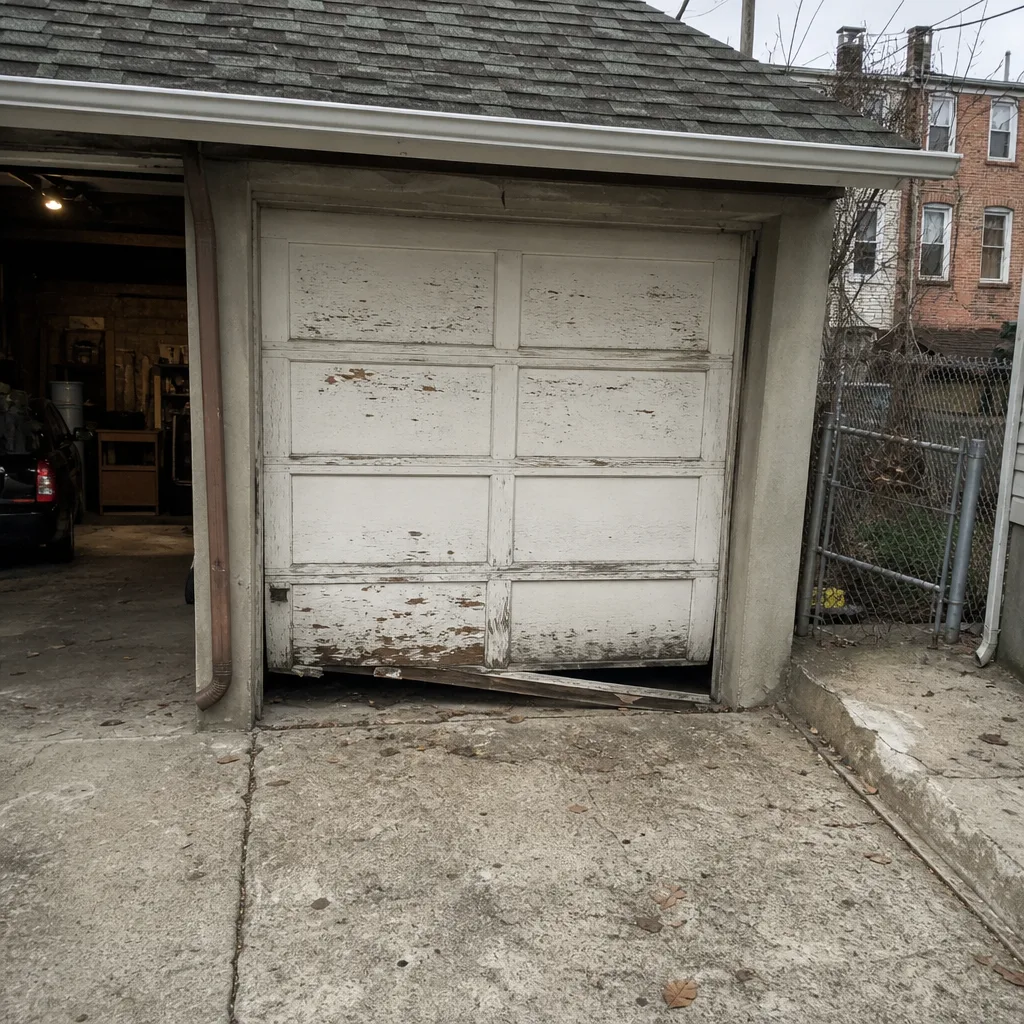 Before
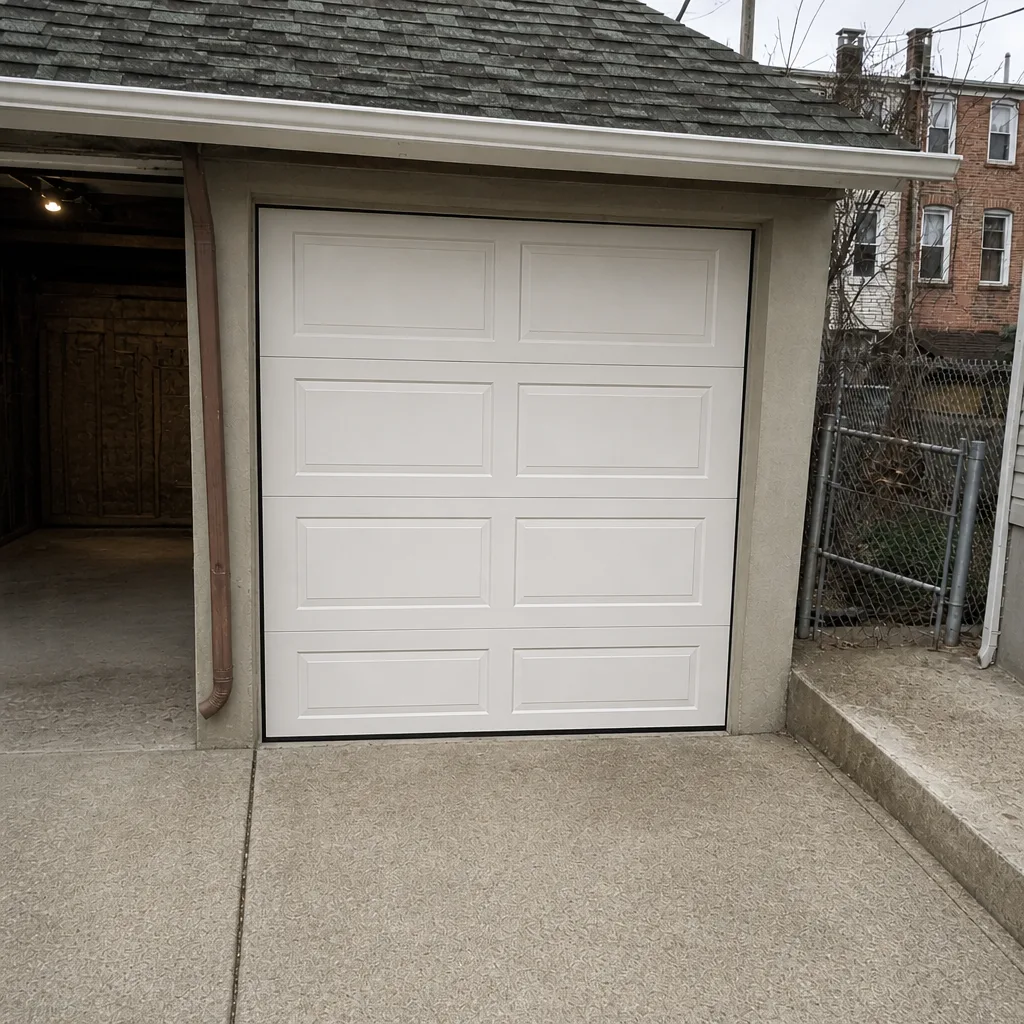 After
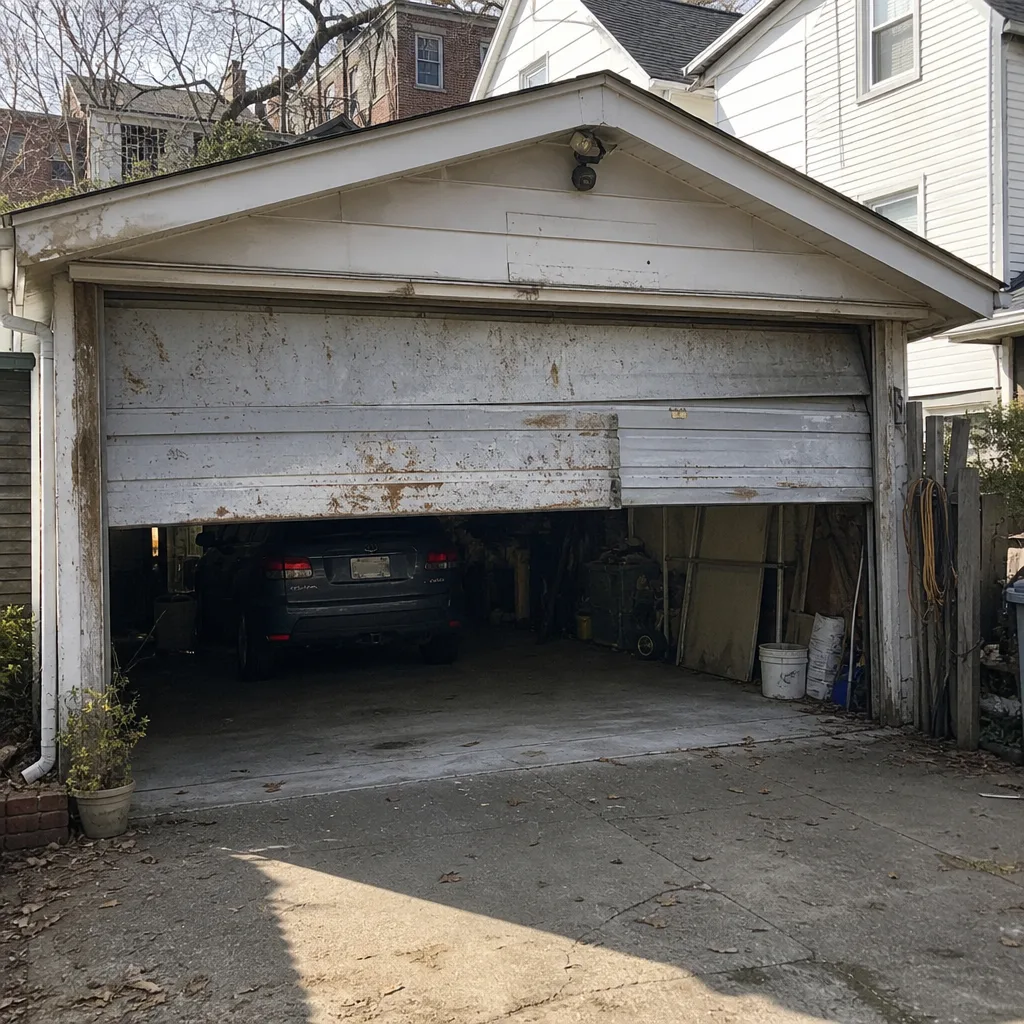 Before
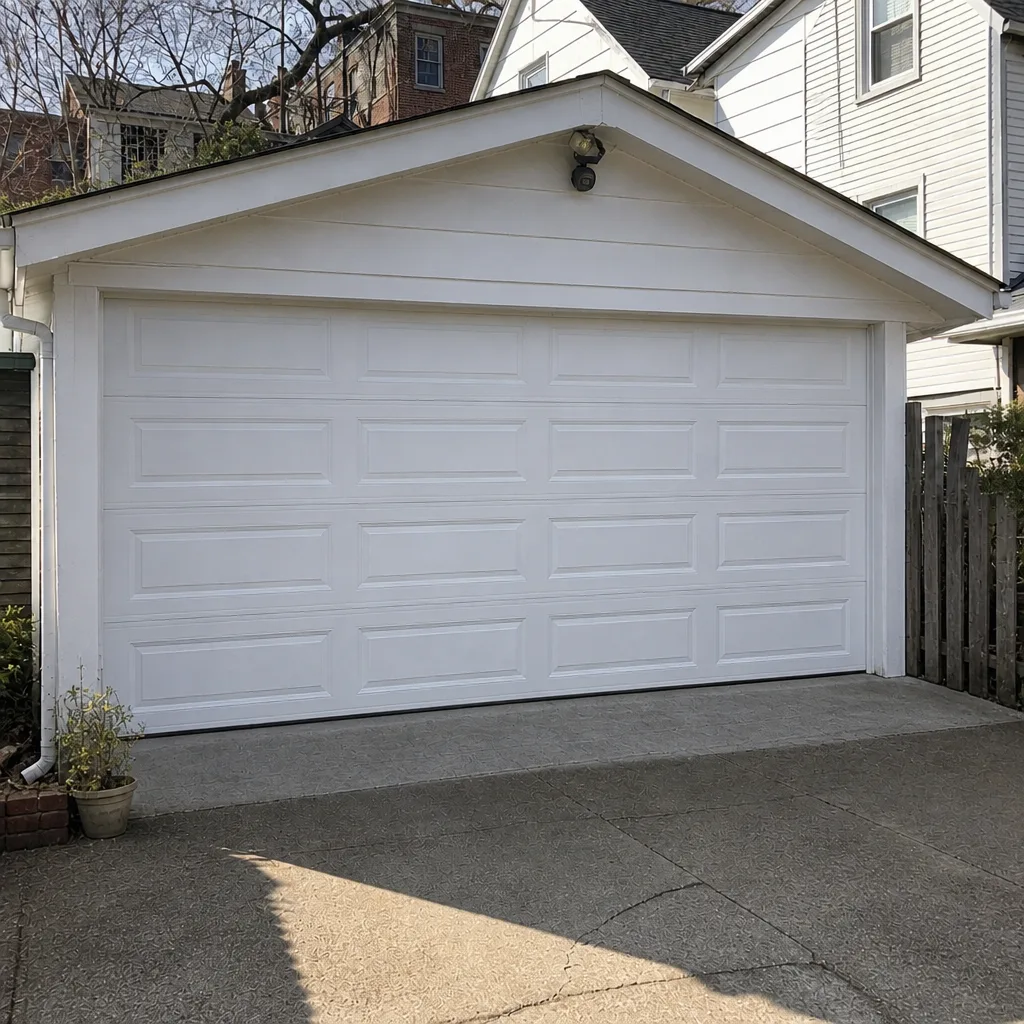 After
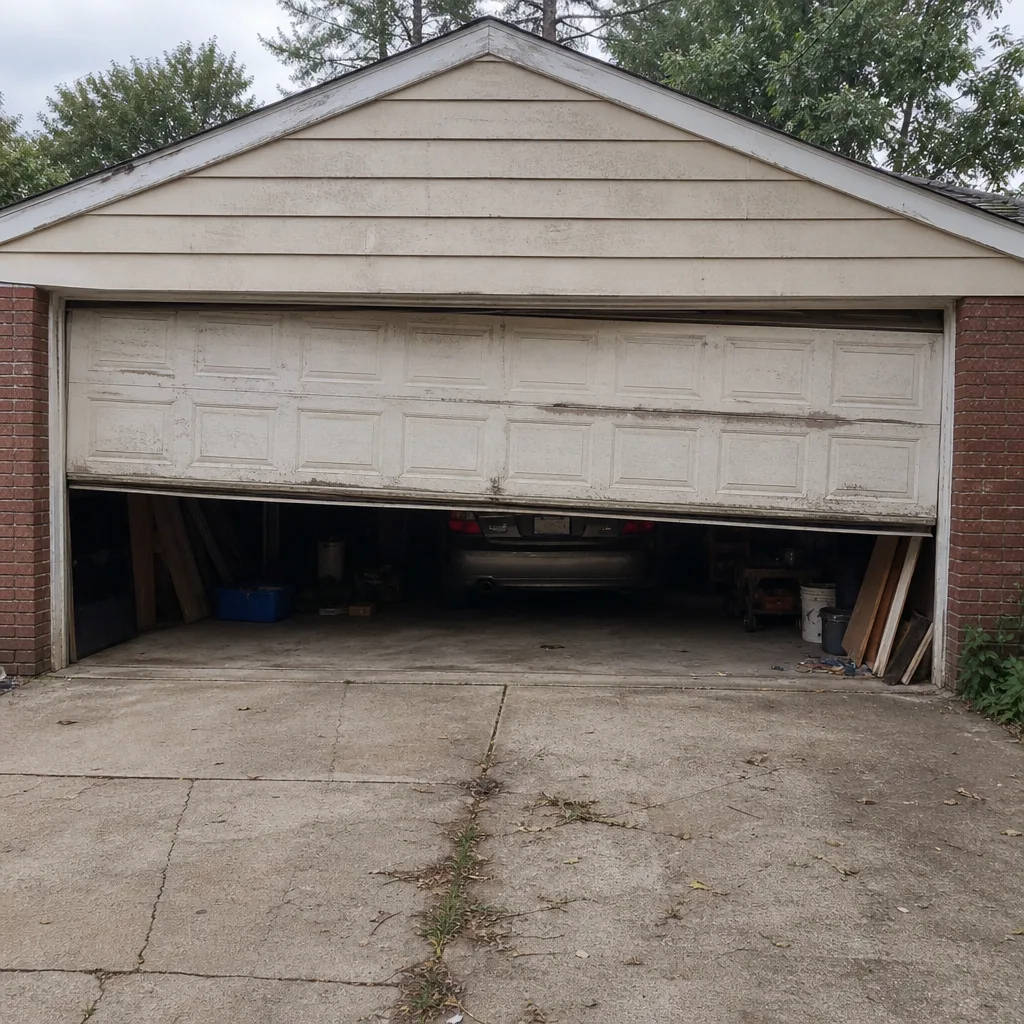 Before
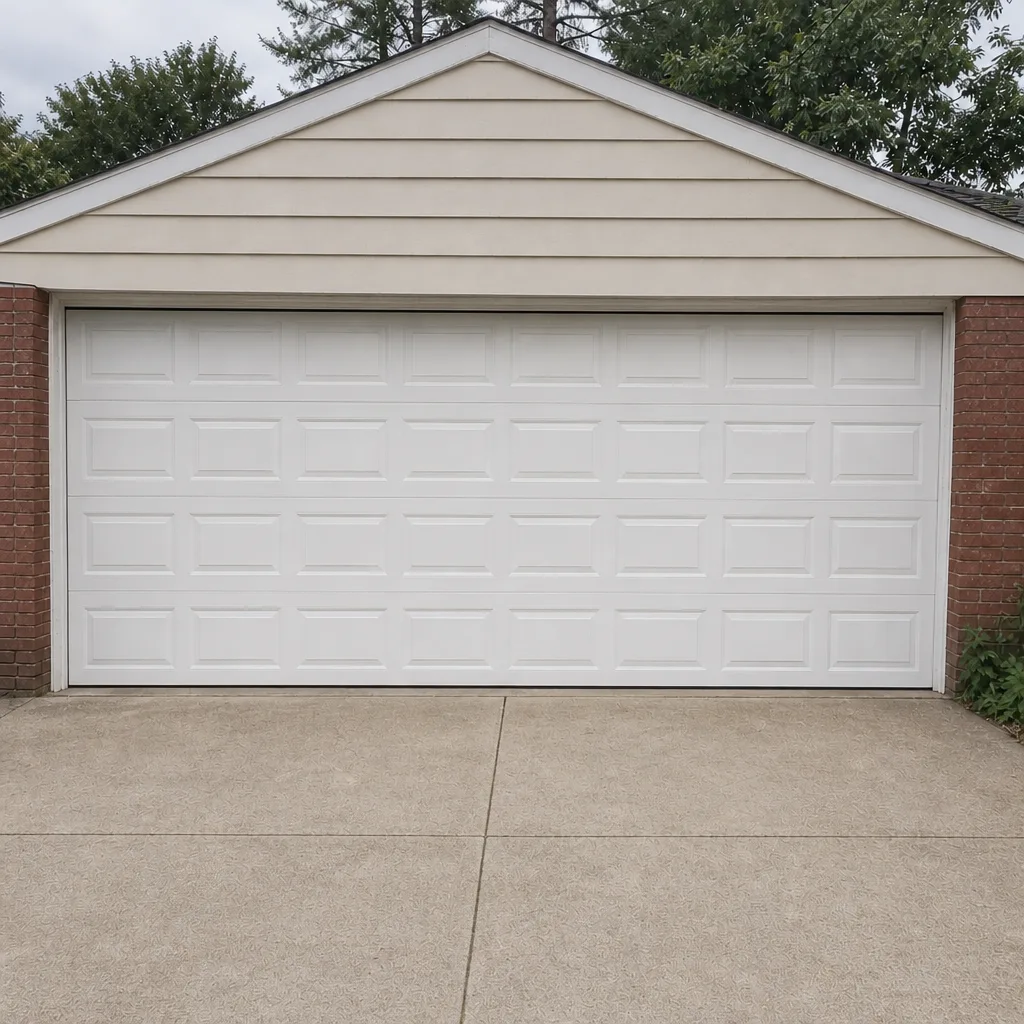 After
Emergency Calls, After Hours, and Same-Day Repair
A door stuck open, a snapped spring, or a dead opener at 10pm is a real problem in Greenwich Village, especially if the garage is your only parking. What you do next matters more than the hour.
Here’s how to think about it:
- Don’t run the door. If a spring has broken or the door is hanging off a track, leave it closed (or leave it as-is if it’s already open) and call.
- Describe the failure precisely. “The door came down crooked and won’t go back up” is a different problem than “the opener runs but the door doesn’t move.” The clearer your description, the better the technician can tell you what’s needed before arrival.
- Ask about scheduling. Not every call turns into a visit that night. The right framing: the contractor should tell you honestly when someone can be there, and what you can do in the meantime to keep the situation safe.
- Expect a written estimate before work starts, even in a rush. A good contractor is still going to quote and confirm with you before touching the door. The urgency doesn’t erase the estimate.
We answer 24/7, and we offer fast dispatch from 7am to 7pm, Sunday through Friday. A call outside dispatch hours is booked into the next opening. If you’re in an emergency and want to talk to someone right now, call (844) 395-2808.
Common Mistakes to Avoid
- Hiring on price alone. A single low bid on a garage door job in Greenwich Village is often the version that doesn’t include the disposal, the balance, or the permit coordination. Read the estimate line by line, and don’t treat the lowest number as the cheapest outcome.
- Not asking about the door vs. the opener separately. They fail differently and are fixed by different parts. A contractor who treats them as one system in conversation usually ends up treating them as one in the estimate, too.
- Skipping the insurance certificate. In older Village buildings where damage could affect a neighbor’s wall or vehicle, unverified insurance is the one detail you can’t take back. Ask, and read it.
- Assuming NYC licensing is the same as other states. It isn’t, and a contractor who moved from out of state may mean well and still be missing a required registration. Verify with the city before work starts.
- Assuming LPC rules don’t apply. Many Greenwich Village properties sit within a historic district, and that affects door appearance and hardware visibility. Ask your city’s building department and ask the contractor to confirm they’ve handled it before.
- Replacing one spring in a pair. A new spring paired with a worn one won’t last. If the estimate quotes a single spring on a two-spring door, ask why.
- Calling during a failure without a plan for the door’s position. A door stuck open overnight is a security issue and can leave the door in a stressed position. Ask the contractor what to do before someone arrives.
When to Call a Professional
Some garage door work is genuinely routine, and a homeowner can handle it. Changing a remote battery, resetting a wireless keypad, light cleaning on tracks. Most of it isn’t. Call a professional when:
- The spring has visibly broken or the door feels unusually heavy lifting it manually.
- The door is unbalanced (it drifts when stopped halfway) or comes down crooked.
- The opener runs but the door doesn’t move, or the door reverses for no clear reason.
- A panel is damaged and the door no longer sits flat closed.
- The door won’t close all the way, leaving the opening exposed.
- You’re replacing the door and need the opening and hardware matched correctly to it.
If your door is stuck open, the spring has snapped, or the opener is dead and you need it working, garage door repair is the call to make. Garage Door Repair Greenwich Village offers free estimates in Greenwich Village and works on the brand you already have: LiftMaster, Chamberlain, Genie, Clopay, Amarr, Wayne Dalton, Craftsman, and Raynor. When it’s time to replace the door itself, our garage door installation team handles the measure, the estimate, and the install. Call (844) 395-2808. We answer 24/7. Fast dispatch, 7am-7pm, Sunday through Friday.
Frequently Asked Questions
Garage door repair in Greenwich Village typically runs in ranges that depend on what’s failed: spring replacement is usually quoted per spring (not per pair), opener repair depends on the model and the failed component, and panel work depends on matching the existing door. Every job gets a written estimate before work starts, and the estimate sets the final price. Call (844) 395-2808 for an exact quote. Estimates are free.
Most garage door calls are same-day problems, and same-day service is the norm when we can schedule it. We answer 24/7, and we offer fast dispatch from 7am to 7pm, Sunday through Friday. A call outside dispatch hours is booked into the next opening. Call (844) 395-2808 and we’ll tell you what’s possible today.
No, not on the work you’ve agreed to. The written estimate is the price, and everything is quoted and agreed before any work begins. If the technician finds something the estimate missed (a damaged track, a worn cable, a hardware issue that only shows up once the door is opened), they should pause and show you before doing anything, and quote the additional work separately. If the price changes after the fact without that conversation, that’s a legitimate reason not to hire that contractor again.
We connect Greenwich Village homeowners with vetted local professionals, and the local pro is licensed and insured as their state requires. Ask any contractor you hire, including ours, for a certificate of insurance and the applicable registration before work begins. In NYC, licensing is handled at the city and county level, not by a single state license, so verifying directly is the right move.
Yes. We’re fluent in eight major brands: LiftMaster, Chamberlain, Genie, Clopay, Amarr, Wayne Dalton, Craftsman, and Raynor. That covers the vast majority of residential doors and openers, including the smart-home-integrated LiftMaster and Chamberlain/myQ ecosystem, plus legacy Craftsman and Genie units that show up in older Village homes. Tell us the brand when you call and we’ll tell you what to expect.
That depends on your property and the scope of work. Many Greenwich Village buildings sit within a historic district, which can bring Landmarks Preservation Commission coordination into the project, especially when the door finish or visible hardware is changing. Ask your city’s building department directly about your address, and ask your contractor whether they’ve worked through that process. A contractor who has handled LPC coordination before will know exactly what to check. Call (844) 395-2808 if you’d like to talk through your project.
The Bottom Line
Hiring a garage door contractor in Greenwich Village comes down to preparation. The right contractor verifies their license and insurance, understands the building stock and access constraints of the neighborhood, asks about LPC rules if your address triggers them, and can work the specific brand of door and opener you already own. The written estimate breaks out parts and labor, quotes springs per spring, and is agreed before any work begins. If you need to talk through your door or you’re ready to book, Garage Door Repair Greenwich Village connects you with a vetted local professional who works the brand you already have. Call (844) 395-2808 for a free estimate. We answer 24/7. Fast dispatch, 7am-7pm, Sunday through Friday.
Written by the team at Garage Door Repair Greenwich Village.