
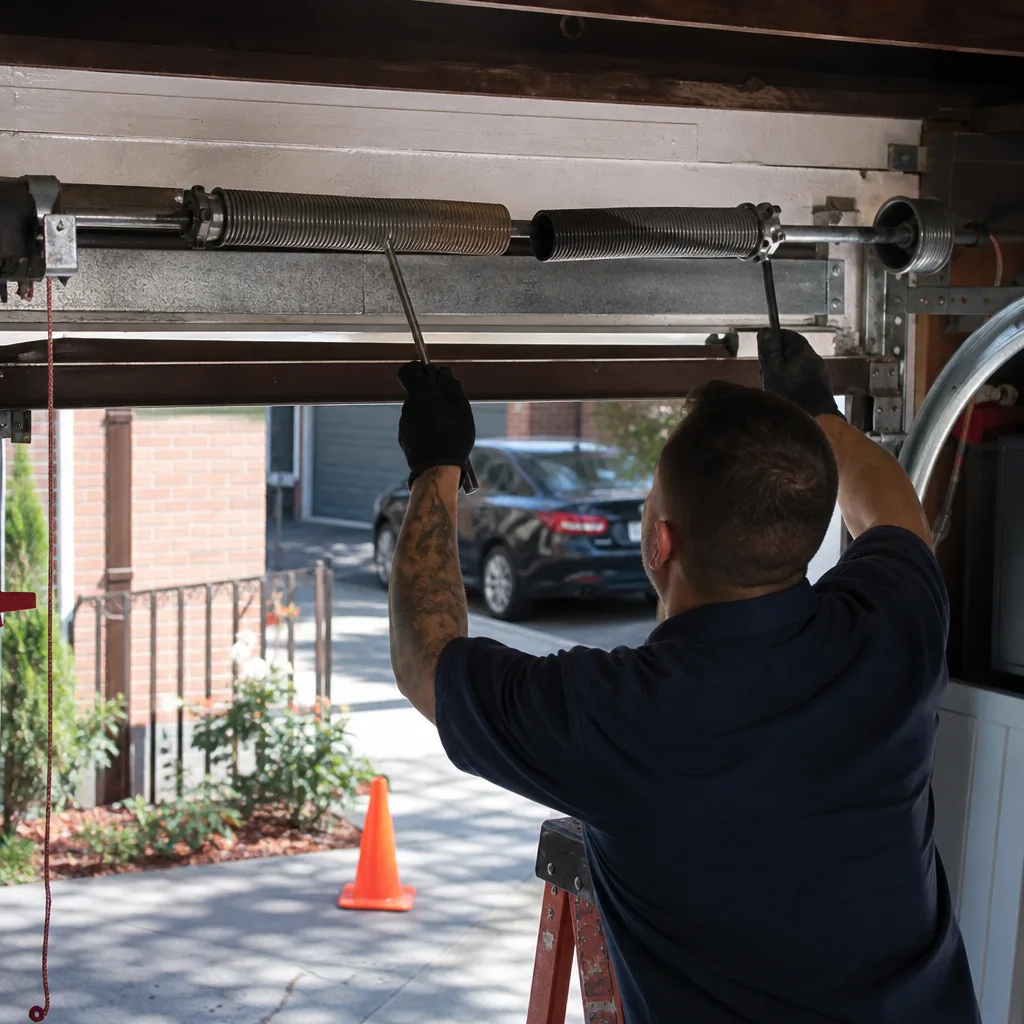
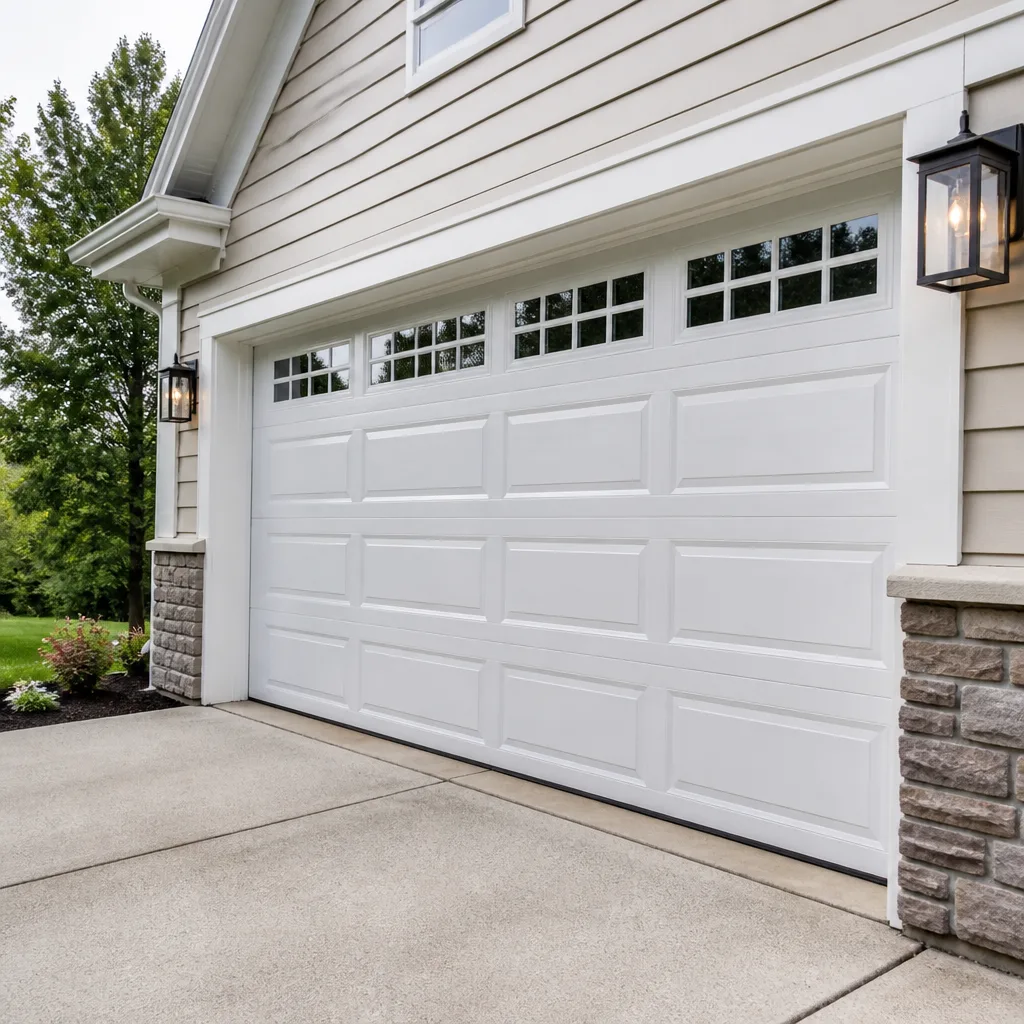
 Raised-panel steel
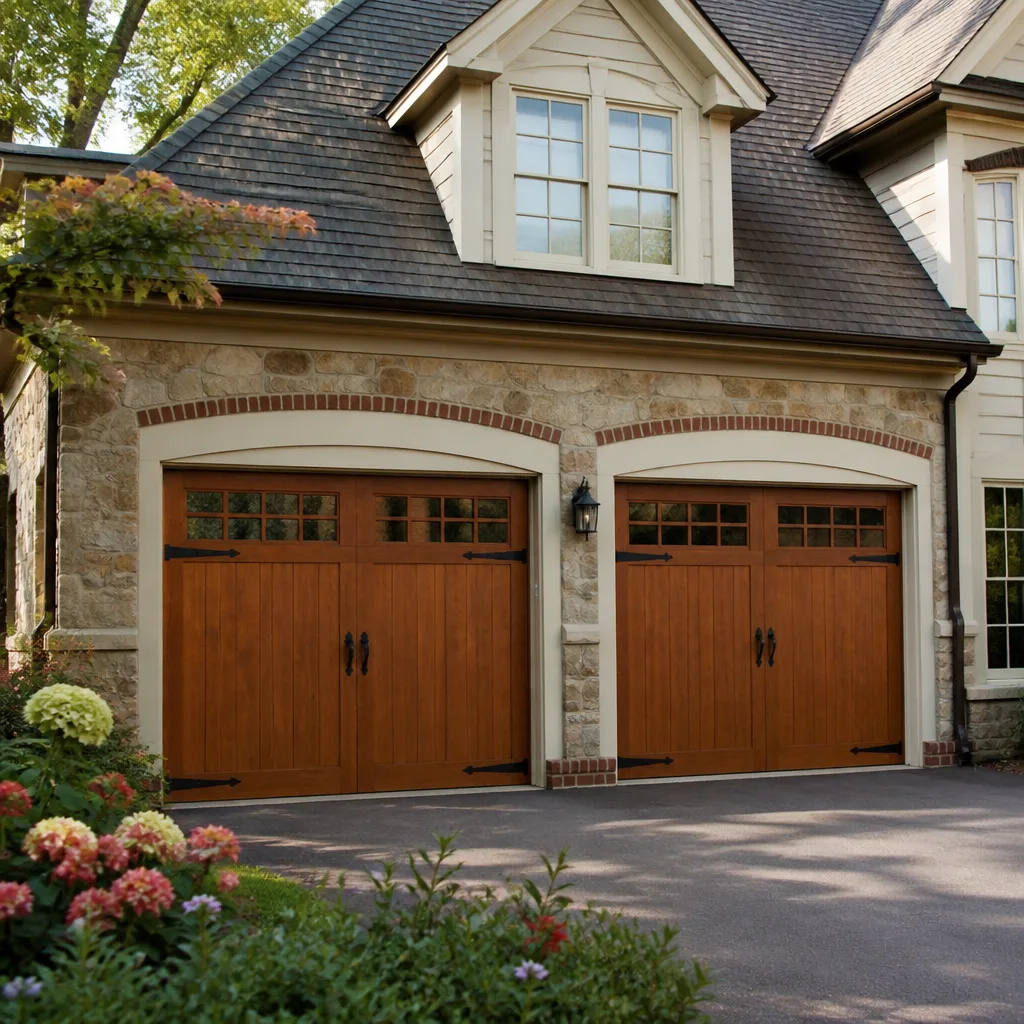 Carriage house
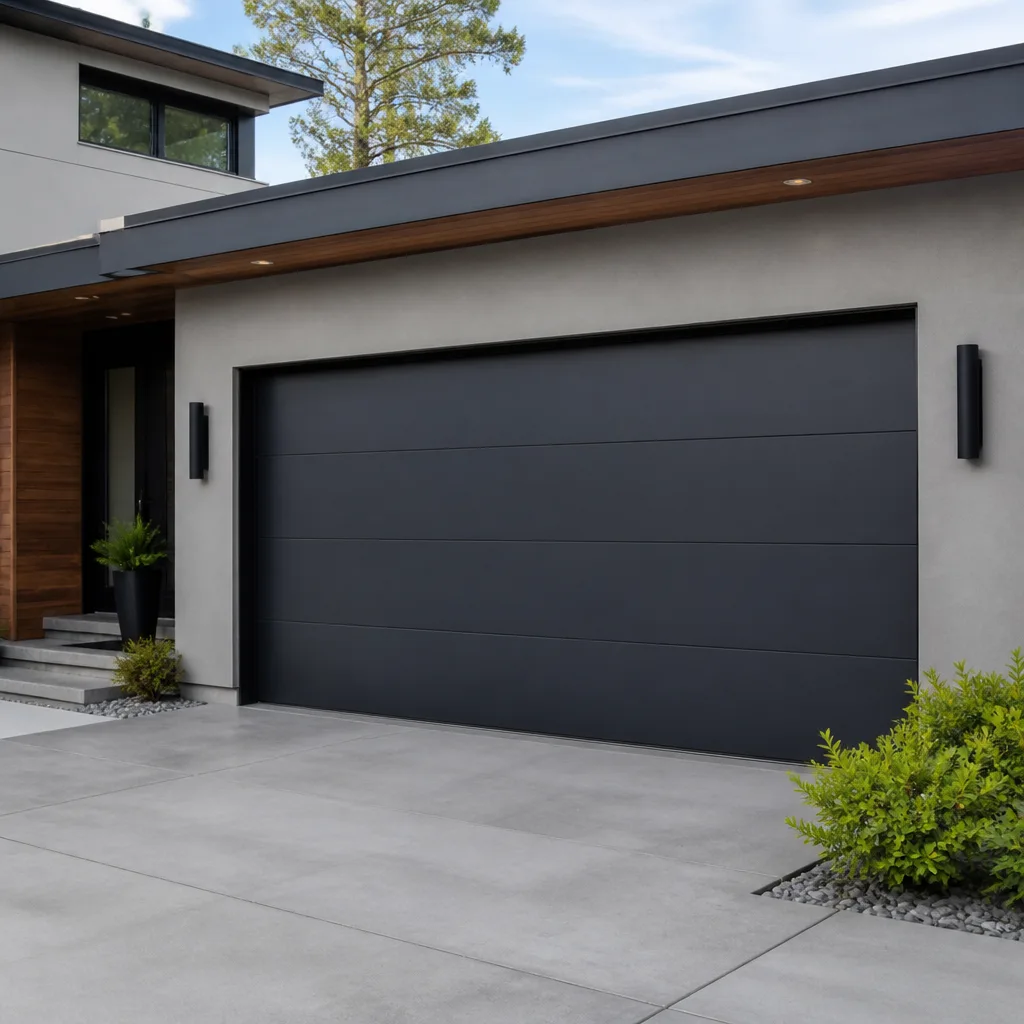 Modern flush
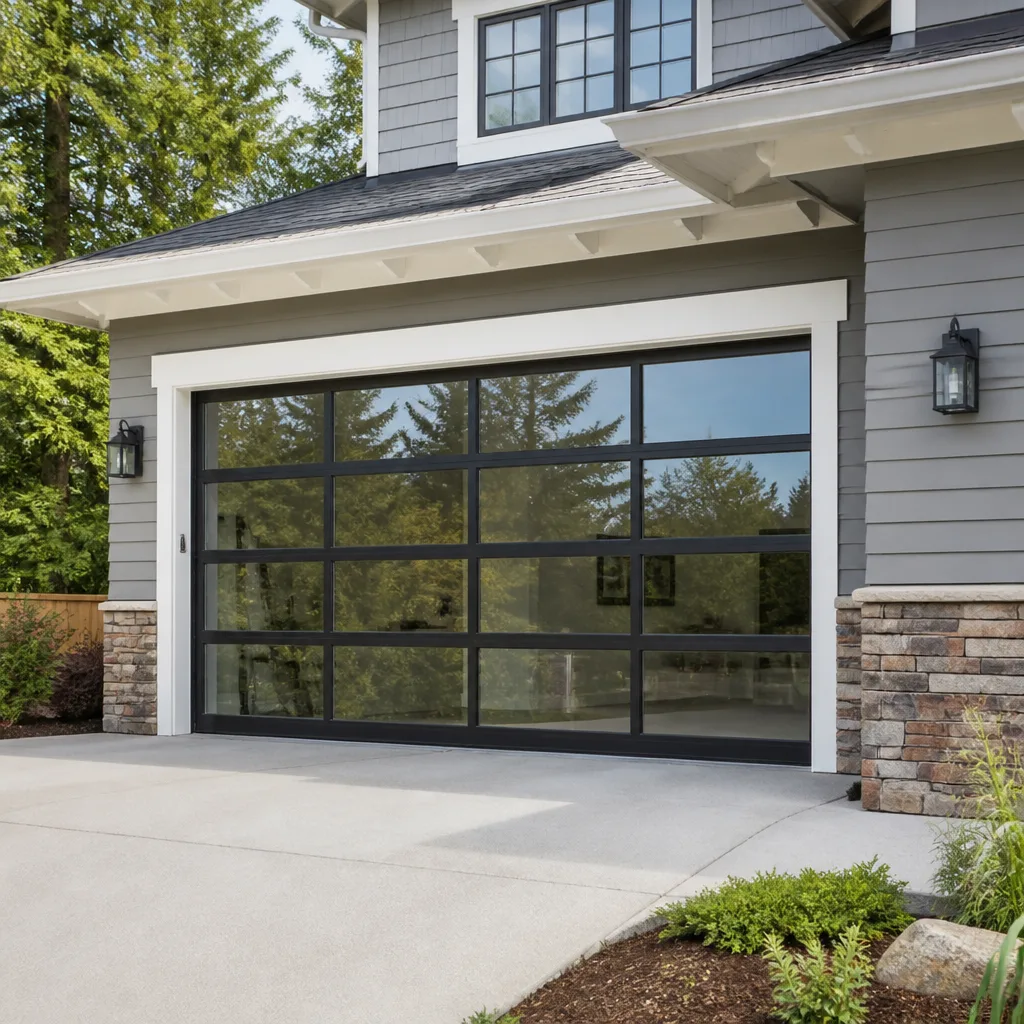 Full-view glass
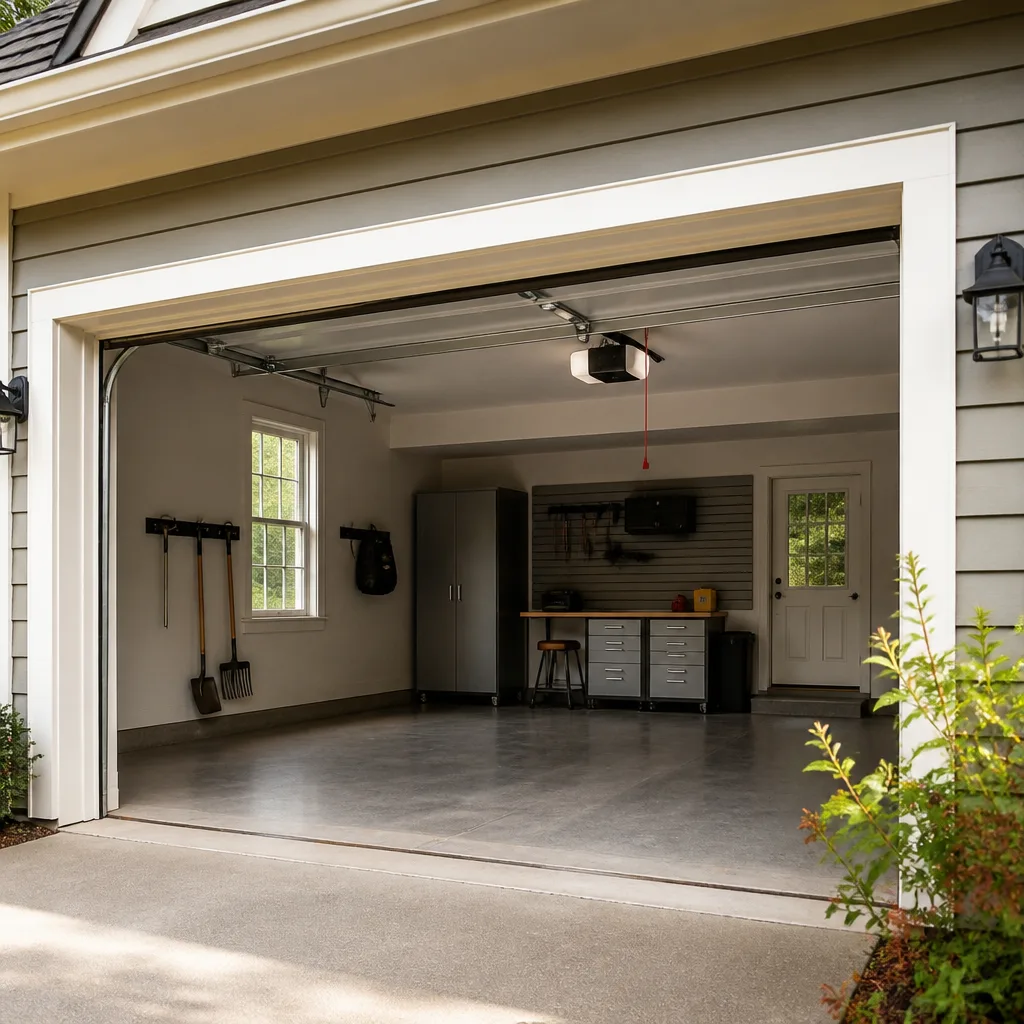 LiftMaster openers
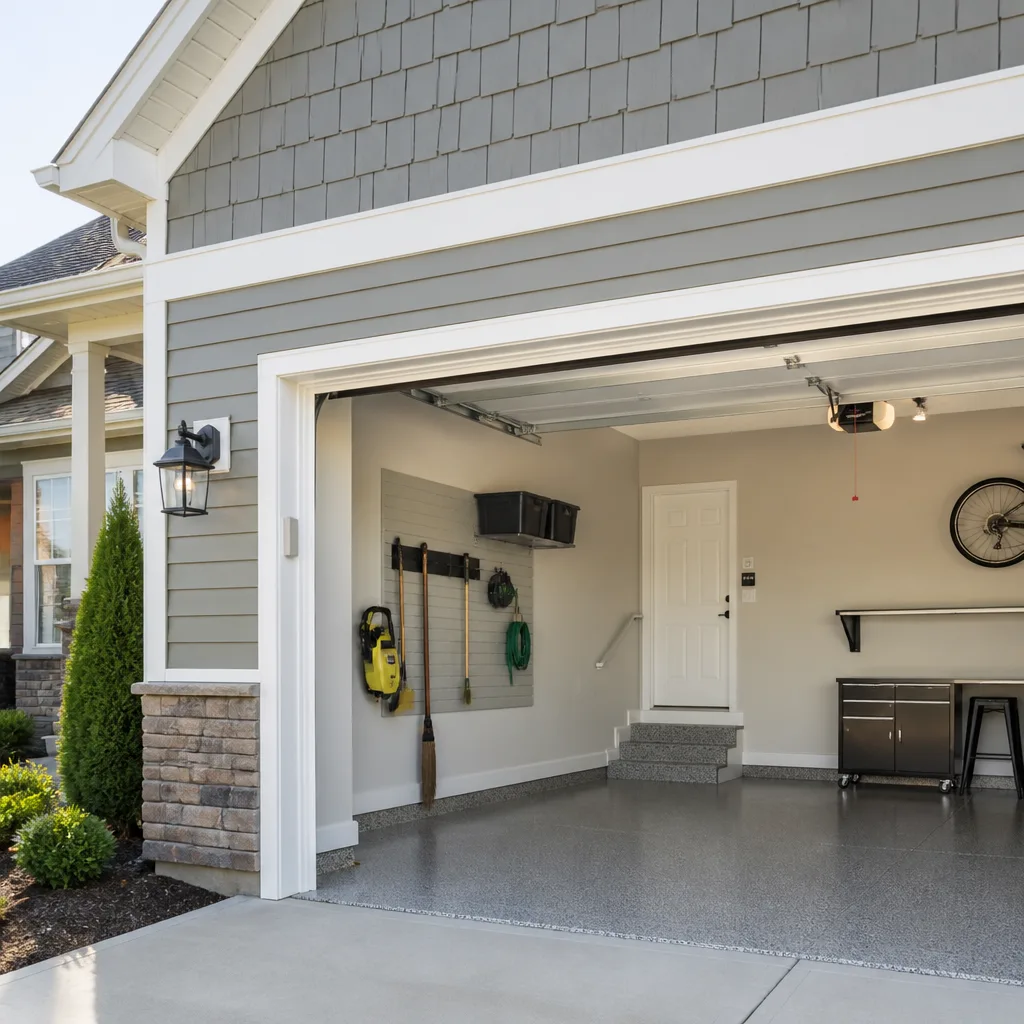 Chamberlain openers
Full 25-point door and opener safety check with every visit - springs, cables, rollers, tracks, and your LiftMaster or Chamberlain opener included
You get a price before we start. It does not change when the pro arrives.
Get your free estimateFast, Reliable Garage Door Spring Repair Across Greenwich Village
When a torsion spring lets go on a carriage-house door, the whole block hears it. If your door is stuck open, sagging shut, or too heavy to lift by hand, call (844) 395-2808. We answer 24/7, with fast dispatch from 7am to 7pm, Sunday through Friday.
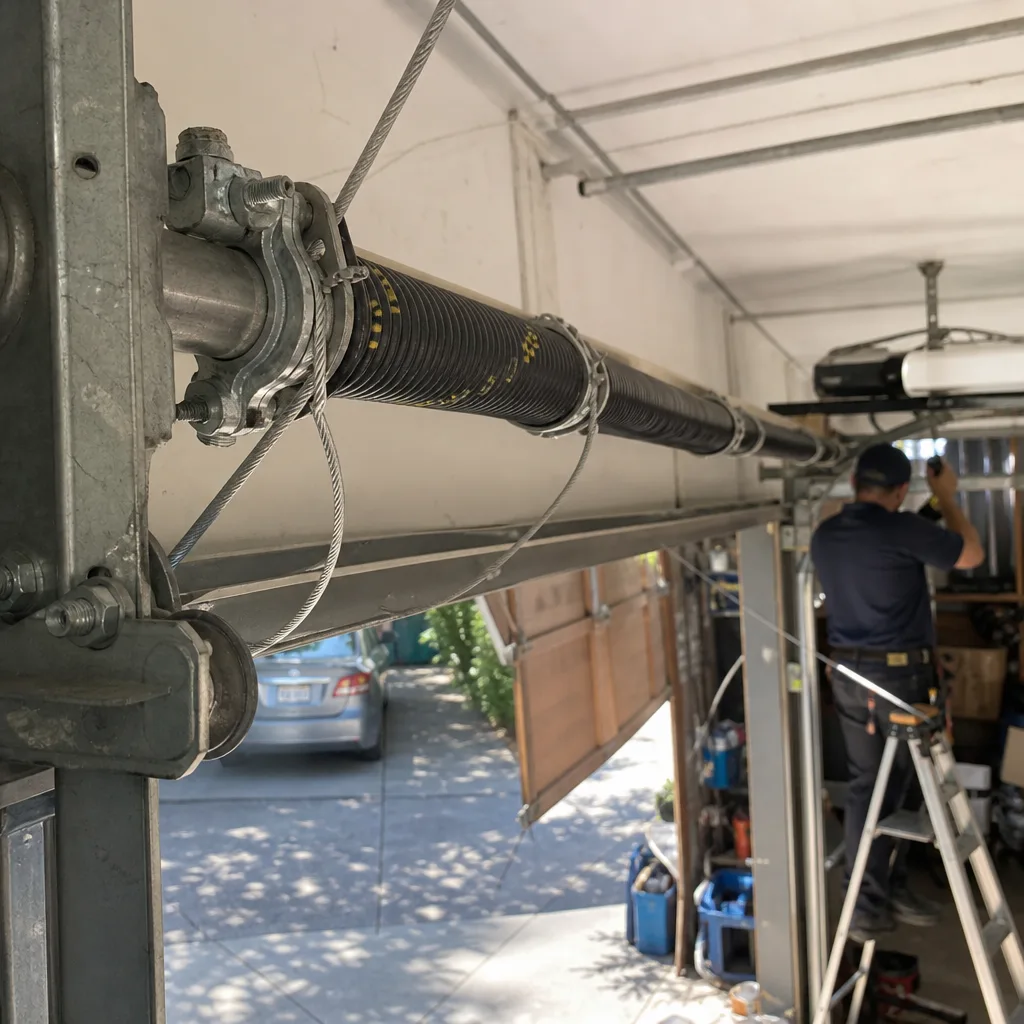
Spring work in Greenwich Village is not the same as spring work in the suburbs. The doors here are older and heavier, the openings are tighter, and half of them sit inside a historic district where the facade can’t be changed without review. We know that going in, which is why we send technicians who understand old wood, original hardware, and the narrow side streets around Washington Square Park where a large vehicle simply can’t stop. Most garage door calls are same-day problems, and we treat them that way.
Spring Repair in Greenwich Village
A broken spring repair in Greenwich Village typically costs $180 – $340 for one spring, and the price is quoted and agreed before any work starts. Most garage door calls are same-day problems, so we keep our schedule open for them.
Key takeaways
- One spring runs a typical $180 – $340. A matched pair is usually replaced together, so a pair costs about twice that.
- Legacy torsion springs in original wood carriage-house doors tend to fail somewhere between 10,000 and 25,000 cycles.
- Historic-district doors often need custom tracks and reinforced framing, not an off-the-shelf swap.
- High-tension springs are dangerous to handle. This is a job for a trained professional.
Styles & brands we work with
- Raised-panel steel
- Carriage house
- Modern flush
- Full-view glass
- LiftMaster openers
- Chamberlain openers
Our Garage Door Spring Repair Services in Greenwich Village
We handle spring repair in-house, because it’s one of the most commonly mishandled jobs in the trade and one of the easiest to get hurt on. Here’s what that covers for a Greenwich Village door.
Torsion Spring Replacement
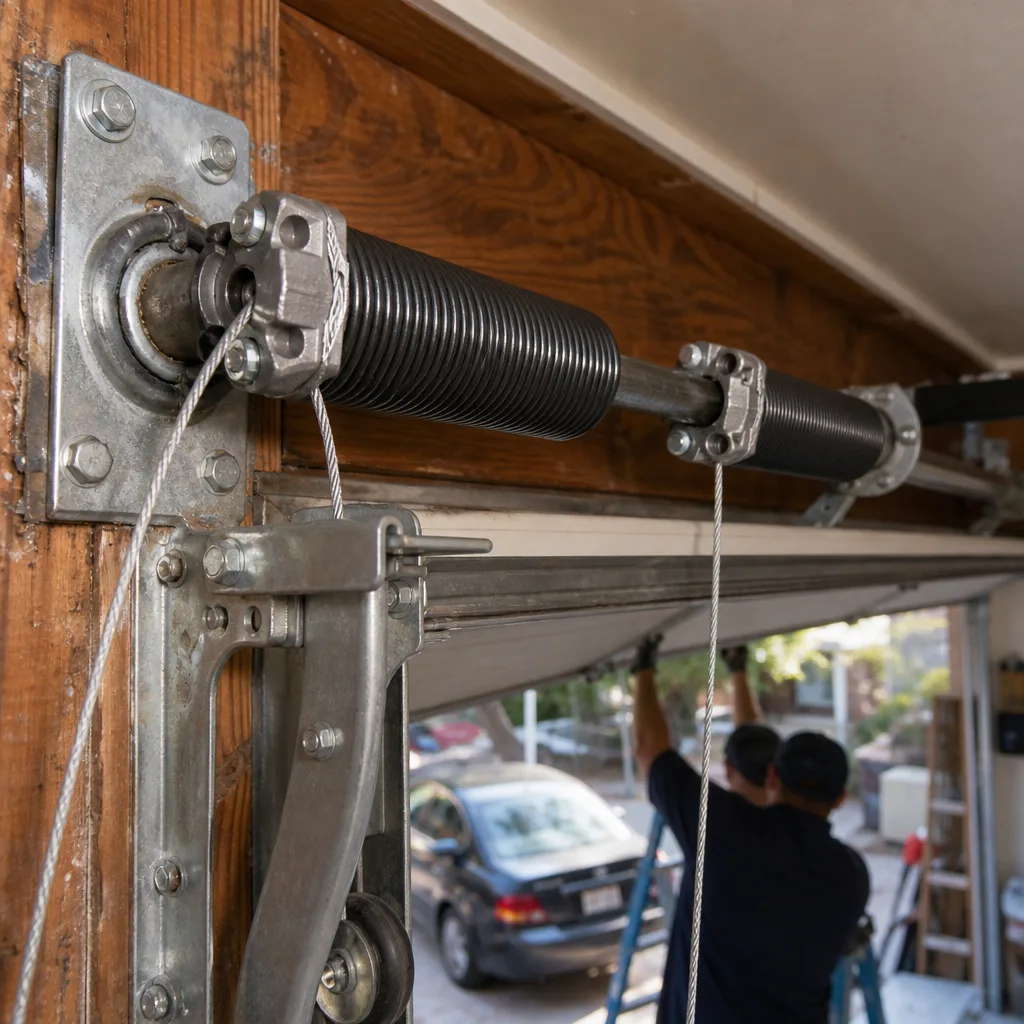
Torsion springs run across the header above the door and carry the full weight through cables and drums. On 19th-century brick carriage houses, that header is often original framing, and the spring anchors are worn. We replace the torsion spring with a high-cycle unit and check the balance of the door before calling it done.
Extension Spring Replacement
Older converted stables and some early sectional doors in Greenwich Village still run extension springs along the sides. They stretch and lose tension over time, and the seasonal swelling of a wood door makes that worse. We match the spring to the actual weight of the door rather than guessing.
Broken Spring Repair
A snapped spring leaves the door stuck open or shut and, on a heavy wood carriage-house door, too dangerous to force. This is where same-day help matters most. Call (844) 395-2808 and the phones are answered around the clock. A call outside dispatch hours is booked into the next opening, Sunday through Friday, 7am to 7pm.
Spring Adjustment
Sometimes the spring hasn’t broken, it’s just out of balance, and the opener is doing work the spring should be doing. On out-of-square openings, the springs fight warped tracks constantly. We adjust tension and realign so the spring and the door are working together again.
Safety Cable Installation
Whenever we open a spring system we check the safety cables. In a tight carriage-house bay where road salt and moisture collect, cables and drums corrode and create uneven tension. New cables are cheap insurance against a spring letting go in the wrong direction.
Spring Inspection
If your door has started to feel heavy, jump, or hesitate, an inspection tells you whether the spring is the cause. It’s worth doing before a failure strands the door. We can work the inspection into a repair visit.
Why Greenwich Village Homeowners Call Garage Door Repair Greenwich Village
We work in a neighborhood where the door on your building might be older than the plumbing, and we’re comfortable with that. Greenwich Village is full of 1820s – 1900s rowhouses, brick carriage houses, and former livery stables turned garages, many with wood doors, low clearance, and openings that were never square to begin with. A technician who only knows suburban overhead doors will misdiagnose the problem here.
We know the difference between an original landmarked door and a modern replacement fitted into a landmarked facade, and we plan the job around NYC Landmarks Preservation Commission and Historic District rules rather than running into them halfway through. Homeowners in Greenwich Village call us because the person on the phone understands what they’re describing and the technician who shows up has seen it before.
Response time to Greenwich Village is a real constraint, not a marketing line. The streets are narrow, the curb space is thin, and a plan for getting materials to the door matters as much as the repair. We sort that out before we arrive.
The One Thing About Greenwich Village Spring Repair You Won’t Read Elsewhere
On the narrow side streets and alleys, like Minetta Lane and the alleys off Hudson Street, the original wood carriage-house doors are so tight and out-of-square that off-the-shelf openers won’t fit. That changes the whole job. A technician here regularly fabricates custom tracks and reinforces 150-year-old framing instead of swapping a unit. You can’t order that from a catalog. The spring has to be sized to the real weight of a warped wood door, the track has to be built to fit an opening nobody measured with a square in a century, and the frame behind it often needs shoring before any of it goes back together. This is why a standard suburban spring call and a Greenwich Village spring call are two different kinds of work.
What a Typical Carriage-House Spring Job Involves
In a 19th-century brick carriage house, a torsion spring often snaps after decades of cycling and the heavy wood door ends up stuck open or closed. The usual cause is fatigue, worsened by the humid, freeze-thaw Northeast climate that warps the door seasonally and throws off its balance, which overstresses the spring. A qualified local pro typically assesses the door balance first, then replaces the torsion spring with a high-cycle unit. Because the original opening is out-of-square and the spring anchors are worn, the job often includes fabricating custom tracks or reinforcing framing before the door is safe to cycle again. None of that is guesswork, and none of it should be a surprise on the invoice.
Trusted Brands We Service in Greenwich Village
We work on the brand you already have. Across Greenwich Village we service Clopay, Amarr, Wayne Dalton, and Craftsman doors and openers, along with the other major makes that cover the vast majority of residential systems. Brand knowledge matters on older doors because the hardware, drums, and spring sizes aren’t interchangeable, and getting them wrong is how a repair comes back a second time. We don’t claim to stock parts locally, but we know what fits your unit and we plan the job around it.
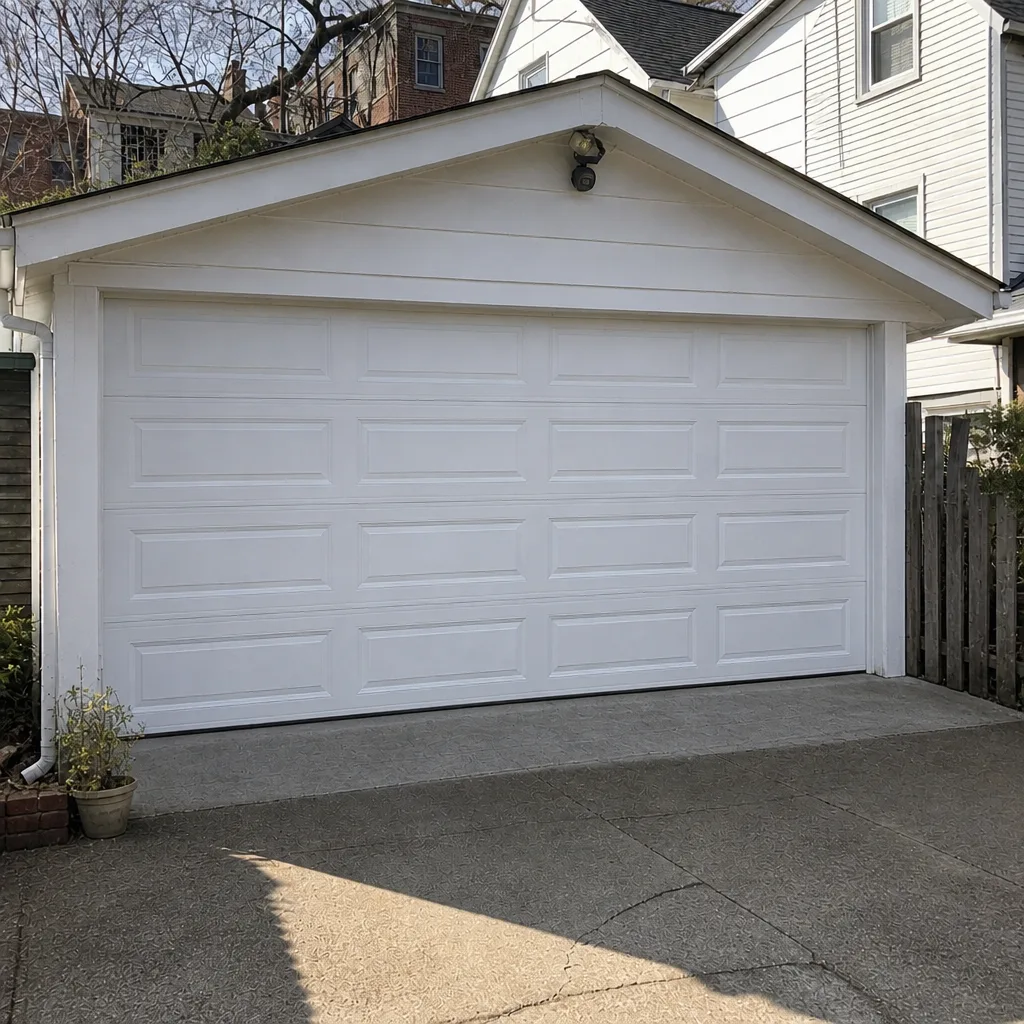
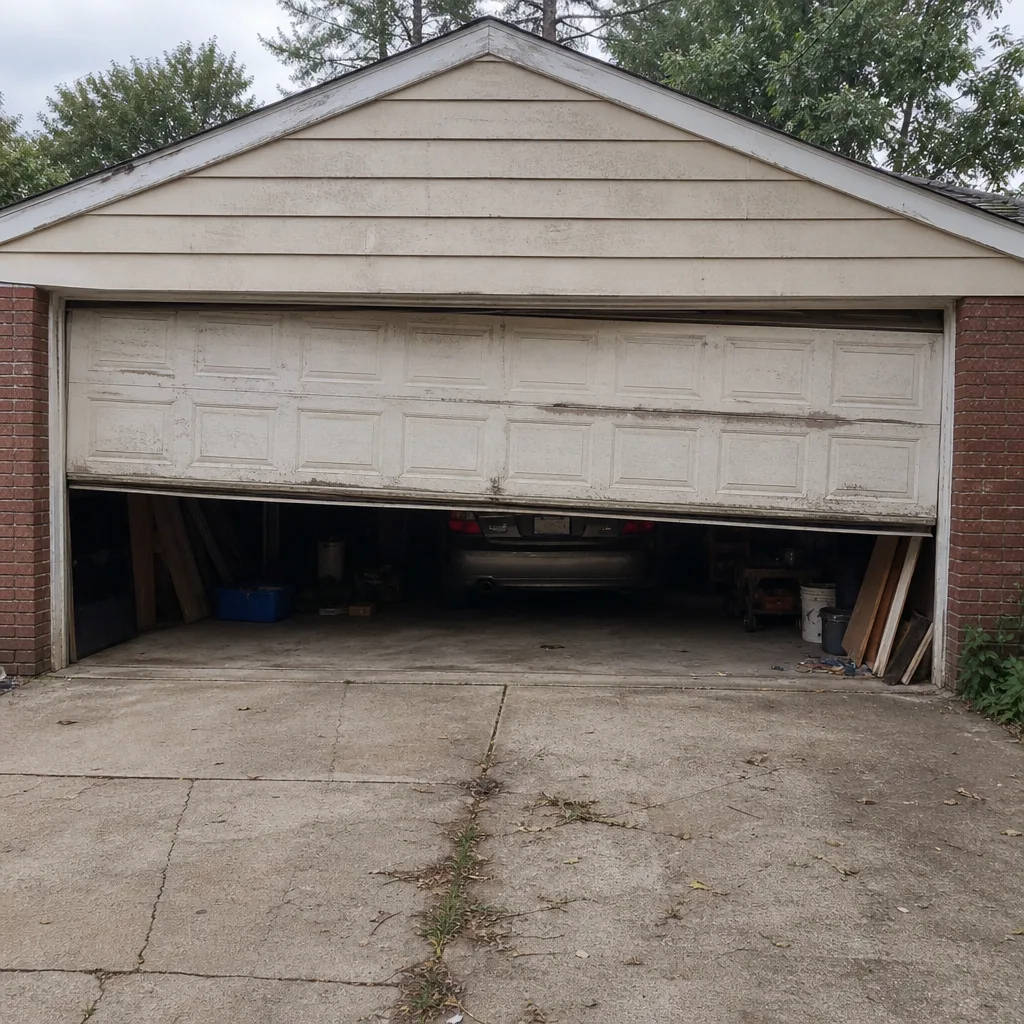
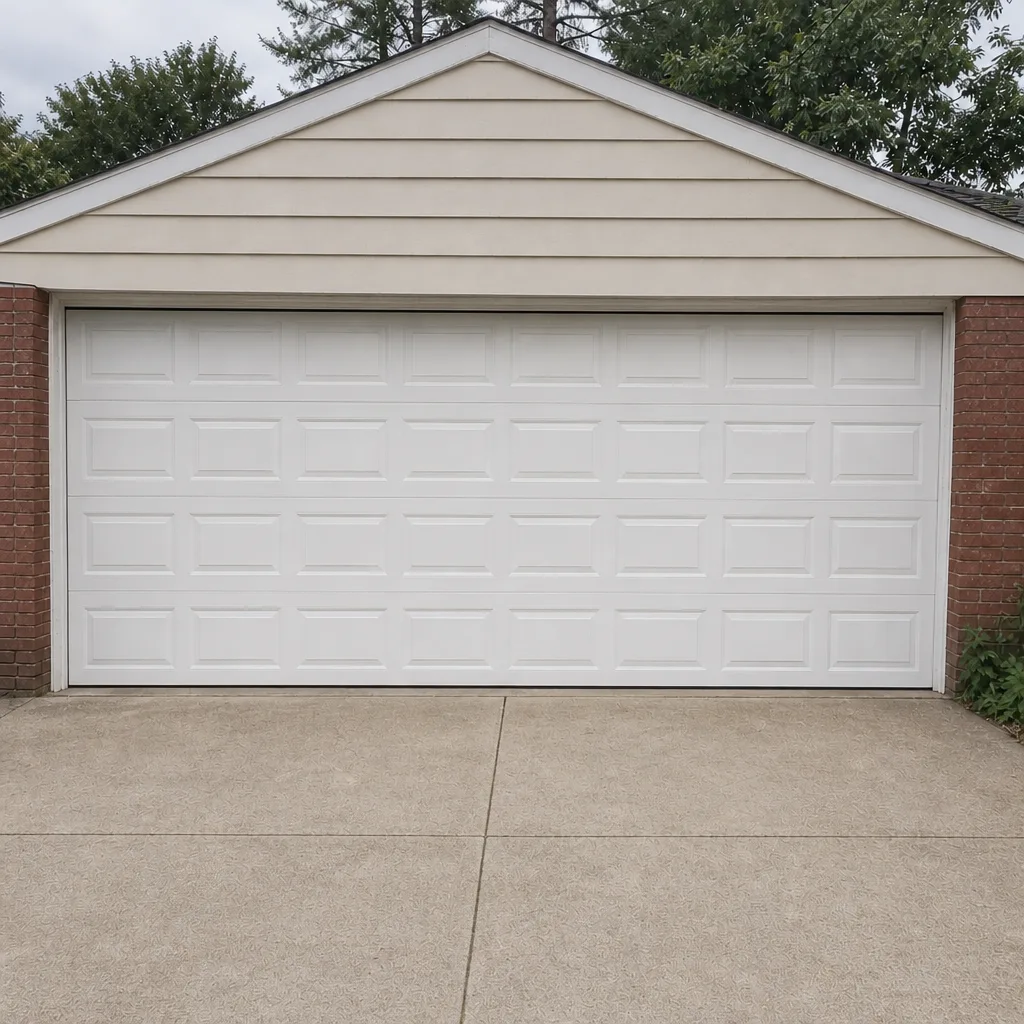
See the difference
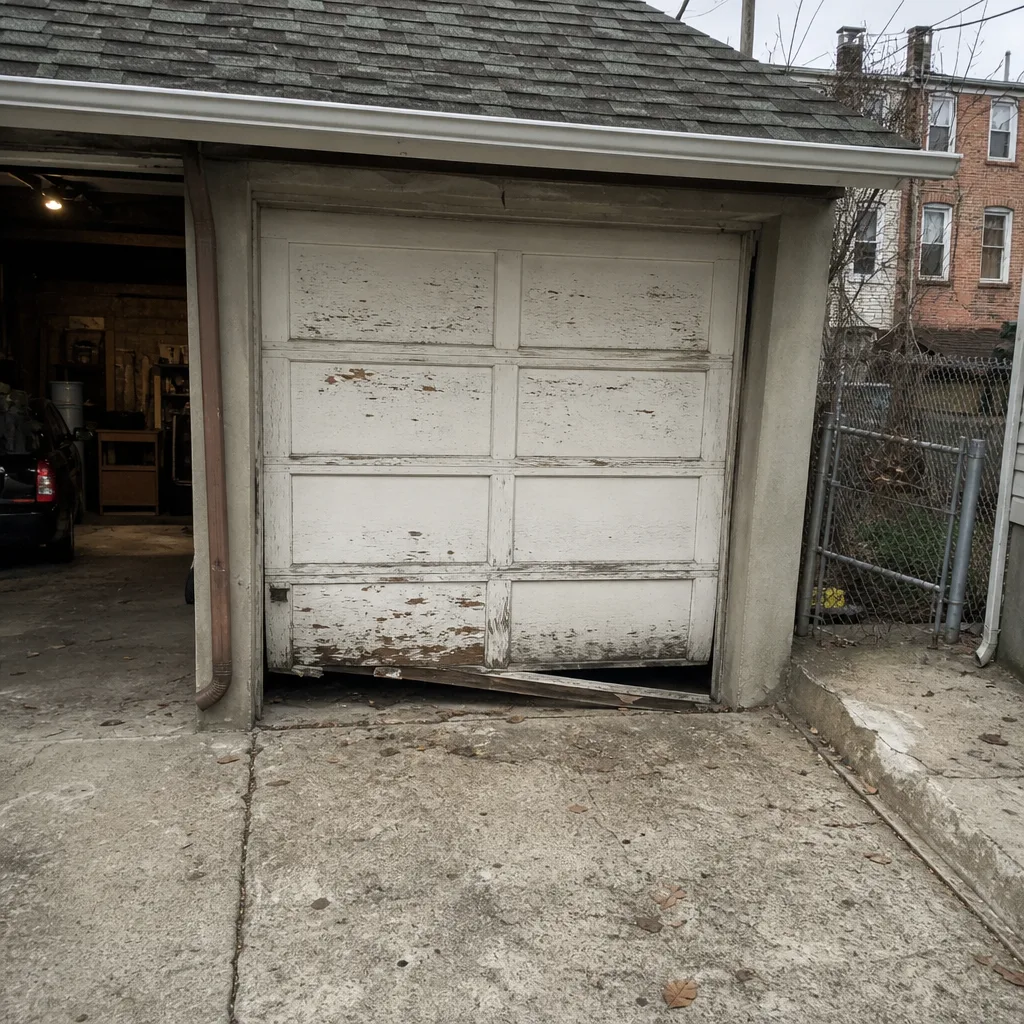 Before
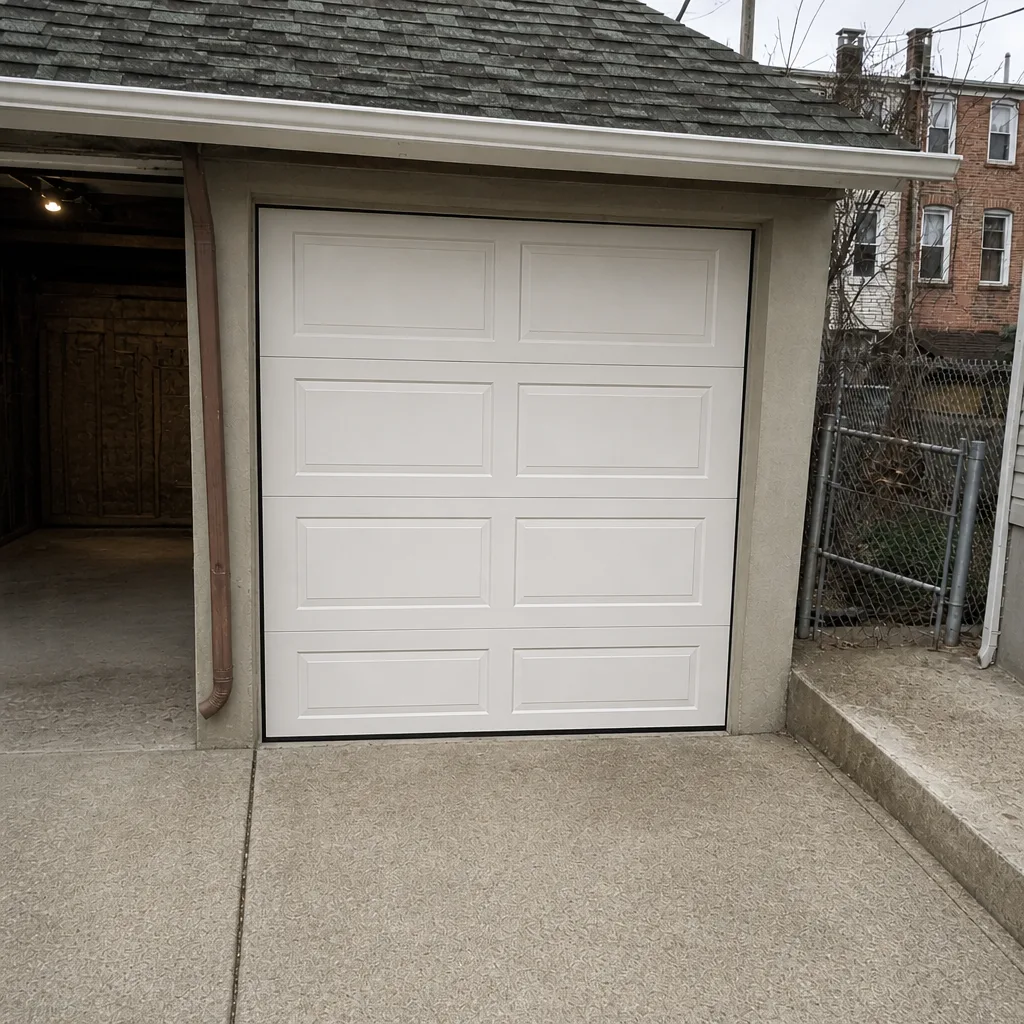 After
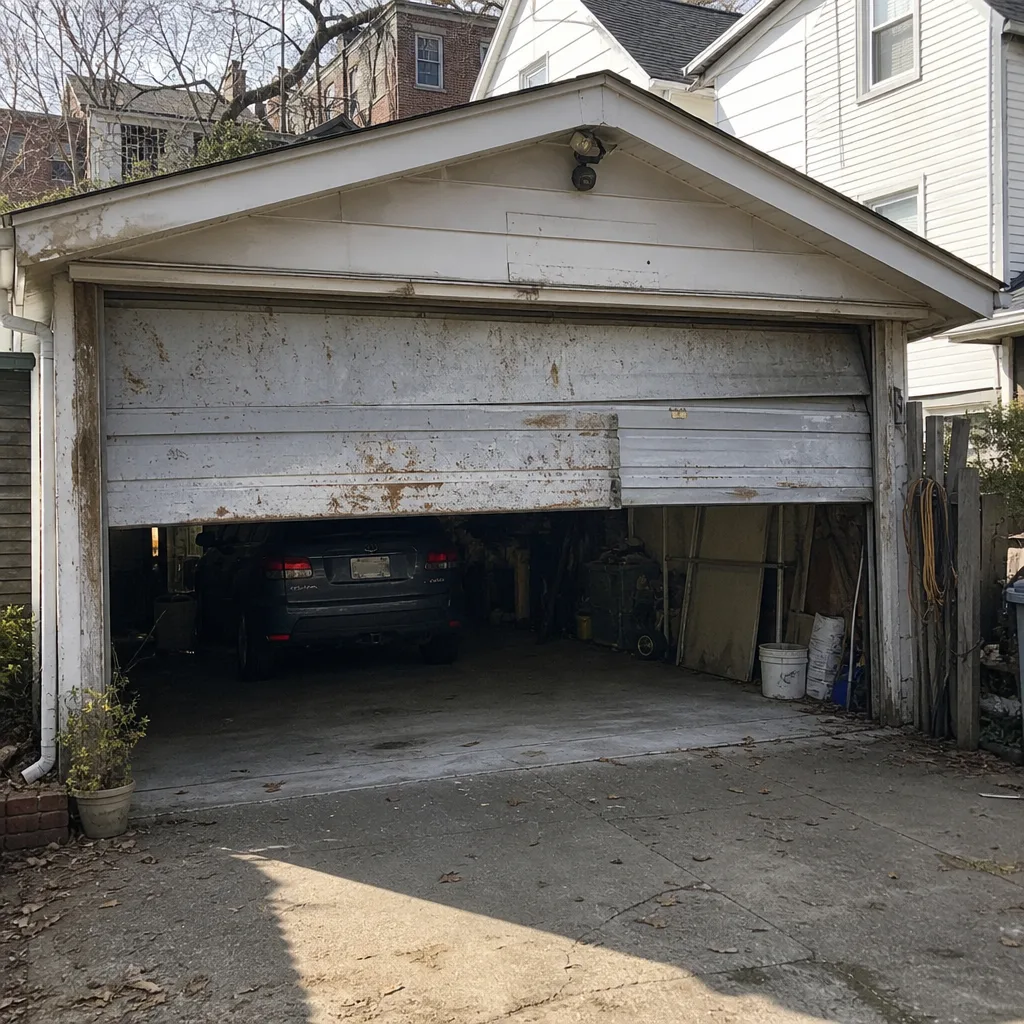 Before
 After
 Before
 After
Common Spring Problems We See in Greenwich Village Homes
- Legacy torsion springs past their cycle life. Original springs in wood carriage-house doors fail after 10,000 – 25,000 cycles. When seasonal wood swelling throws the door out of balance, that fatigue arrives faster.
- Corroded cables and drums. Road salt and moisture collect in tight carriage-house bays, and rusted cables create uneven tension. That uneven tension leads to premature spring breakage.
- Out-of-square openings. Non-standard, out-of-square openings force springs to fight warped tracks all day. That wear accelerates, and off-the-shelf replacements don’t solve it.
- Rot in wooden jambs and headers. Tight bays trap moisture, and the wood behind the spring anchor softens. A spring can’t hold on framing that’s rotting out from behind it.
Pricing for Garage Door Spring Repair in Greenwich Village, NY
These are typical estimated ranges for the Greenwich Village market. The written estimate sets the final price, and we quote and agree it before any work starts.
| Service | Typical Estimated Range |
|---|---|
| Spring Repair (one spring) | $180 – $340 |
| Cable Repair | $130 – $250 |
| Track Realignment | $120 – $240 |
A matched pair of springs is usually replaced together, so a pair costs about twice the single-spring range. What moves a spring job toward the top of the range here is the condition behind the door: worn anchors, rot in the framing, or out-of-square tracks that need custom fabrication. Estimates are free, so there’s no cost to find out where your door sits. Call (844) 395-2808 for an exact quote.
We Also Serve Cities Near Greenwich Village
Greenwich Village sits close to a handful of neighborhoods with the same older housing stock and the same narrow-street constraints. If you’re just outside the Village, we also cover the garage door spring repair needs of homeowners in the East Village, Tribeca, Chelsea, and Gramercy.
Serving Greenwich Village, NY – Our Local Coverage Area
We serve Greenwich Village and nearby communities. Use the map below to see the area we cover. If you’re nearby, we can almost certainly help.
FAQs – Garage Door Spring Repair in Greenwich Village
It can usually be repaired without replacing the door. The spring is a wear part, not a fixture, so a qualified pro can replace it with a high-cycle unit sized to the door’s actual weight. If the framing behind the spring has rotted, that gets reinforced too. Replacing a historic door is a much bigger project and usually unnecessary. Call (844) 395-2808 for an assessment; estimates are free.
Torsion springs run horizontally above the door on a shaft; extension springs stretch along the sides. It matters for repair because the two systems fail differently and use different hardware, so the replacement has to match. Older converted stables here often have extension springs, while most modern replacements use torsion. We’ll confirm yours on the first visit. Call (844) 395-2808 to book an inspection.
It could be, and the opener straining is the clue. When a spring loses tension, the opener does work the spring should be doing, and on a heavy warped wood door that shows up fast. The warp itself may also be throwing off balance. Either way, the fix is to check the spring and the door balance together. Call (844) 395-2808 for an exact quote.
Yes, on a door that gets used every day. A high-cycle spring is built to last longer before fatigue sets in, which matters more on a heavy wood door that’s already stressing the hardware. You’ll spend more up front and replace springs less often. We’ll price both options in the written estimate. Call (844) 395-2808 – estimates are free.
Safety cables on the springs and sound anchors in the framing are the essentials. In a historic district, the work also has to respect Landmarks Preservation Commission and Historic District rules, so anything visible from the street gets planned around them. Fire-safety upgrades in wood-frame garages come up too. Ask your city’s building department about permit requirements. Call (844) 395-2808 to talk it through.
What Happens When You Call
You describe what the door is doing. We tell you what it usually means on a door like yours and set up a time for a free estimate. The technician confirms the spring, cable, and track condition on site, and you get a written price before anything is touched. No surprises after the fact.
If the door is stuck open or a spring has snapped, don’t force it. High-tension springs and cables can cause serious injury, and this is one repair that genuinely belongs to a trained professional. Call (844) 395-2808 for a free estimate. We answer 24/7. Fast dispatch from 7am to 7pm, Sunday through Friday, and we’re closed on Saturday.
Written by the team at Garage Door Repair Greenwich Village.